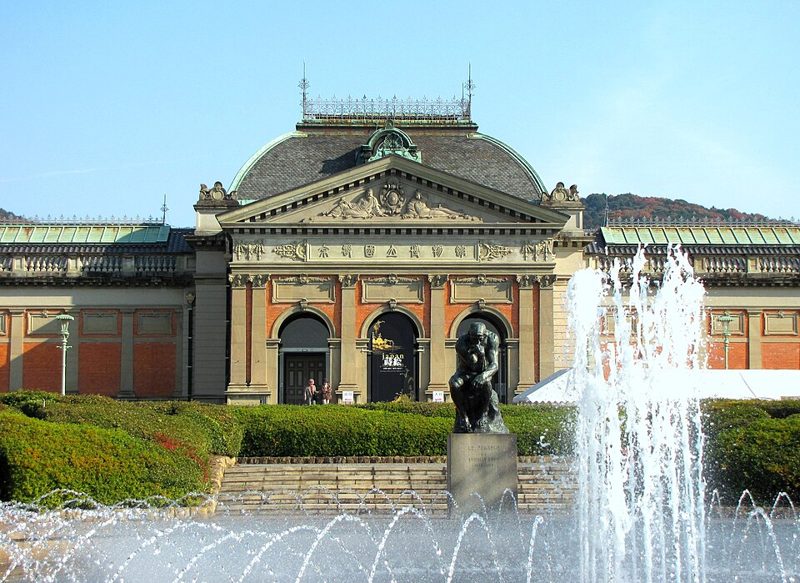
New Year Special Exhibition: All About Sheep — Celebrating the Zodiac at Kyoto National Museum
- Dates
- Dec 22 (Tue) – Feb 7 (Sun)
- Hours
- 09:30 – 17:00
- Price
- Adults ¥700; university students ¥350; high school students and younger, visitors under 18, and visitors aged 70 and over free
- Where
- Kyoto National Museum, Heisei Chishinkan Wing, Gallery 2F-2 (Shichijo)
 One more nearbySpecial Exhibition: The Tale of Genji — Splendor of the Imperial Court at Kyoto National Museum
0.0 km · Oct 6 (Tue) – Nov 29 (Sun)More on Kyochika53 more · Art exhibition in KyotoFree audio guidesSights in Kyoto with walk-and-talk audio guides

See the Important Cultural Property Scroll of the Twelve Animals.
Good to know
Discover cultural treasures featuring sheep, the zodiac animal of 2027. Open until 8:00 PM on Fridays. The same admission ticket provides access to all exhibitions in the Heisei Chishinkan Wing on the day of your visit.
- Dates
- Dec 22 (Tue) – Feb 7 (Sun)
- Hours
- 09:30 – 17:00
- Venue
- Kyoto National Museum, Heisei Chishinkan Wing, Gallery 2F-2
- Nearest station
- Shichijo
- Admission
- Adults ¥700; university students ¥350; high school students and younger, visitors under 18, and visitors aged 70 and over free
About this event
The sheep is the zodiac animal for 2027, and this special New Year exhibition places it at the centre of Japanese and East Asian art. Although sheep have not traditionally been familiar livestock across much of Japan, they have long appeared in works related to the twelve zodiac animals. Exhibits include a bronze mirror decorated with zodiac signs, a ceramic dish by Okuda Eisen and the Important Cultural Property Scroll of the Twelve Animals. Visitors can also see a rubbing of a zodiac figure from Gyeongju, Korea, and stone sculptures of sheep. Together, the objects reveal how a single animal has been interpreted across different regions and artistic traditions.
Highlights
- See the Important Cultural Property Scroll of the Twelve Animals.
- Examine the zodiac-decorated dish by Okuda Eisen.
- Discover unusual sheep-shaped objects, including glazed ceramics and stone carvings.
- Compare Japanese zodiac art with a rubbing from Gyeongju, Korea.
- Good for
- For families and travellers interested in zodiac animals, Japanese New Year traditions and East Asian art.
Good to know before you go
- Displayed works and exhibition periods are subject to change.
- The painting after Liang Kai depicting Huang Chuping is scheduled for display until January 17.
- Students and visitors eligible for free admission must show appropriate identification.
- Paid museum audio commentary is available for selected works.
Pochikichi's story cornerWhy is the sheep part of Japan's zodiac despite being an unfamiliar animal?
The sheep represents the zodiac year 2027. Wool clothing is familiar in Japan, but sheep themselves have historically been less common outside Hokkaido. The Kyoto National Museum explains that Japan's geography made it difficult to secure extensive grazing land. Nevertheless, sheep became an established symbol in Japanese art through the twelve-animal zodiac.
In China and Europe, sheep have long been common livestock. In Japan, their presence can also be understood through decorative motifs and representations of the zodiac. These different relationships between people and animals offer an interesting way to approach the artworks.
The exhibition includes mirrors and ceramic vessels featuring zodiac imagery, alongside objects depicting sheep directly. The Important Cultural Property Scroll of the Twelve Animals presents the zodiac creatures in narrative painting, while other pieces explore their forms through ceramics, lacquer and stone.
A rubbing associated with the tomb of Kim Yu-sin in Gyeongju, Korea, provides another perspective on East Asian zodiac culture. The materials and artistic techniques differ, yet the sheep connects them. That is why it is worth comparing the sheep imagery in Japanese crafts with the zodiac figure from Korea.
Sources: Kyoto National Museum — Exhibition highlights and list of works (Japanese)
Also nearby
Within walking distance, with dates overlapping
Next stop: book for later today PR
Experiences near here you can book on Klook.
Gion Walking TourGion and Yasaka Pagoda small-group walking tour→Sushi CookingHands-on sushi workshop in English→Ad: Klook affiliate links.
🍜 Where to eat after
Restaurants near here on Google Maps→Many restaurants in Kyoto take reservations, and some are cash only. Check the restaurant page before you go.
FAQ
- What is New Year Special Exhibition: All About Sheep — Celebrating the Zodiac at Kyoto National Museum?
- The sheep is the zodiac animal for 2027, and this special New Year exhibition places it at the centre of Japanese and East Asian art. Although sheep have not traditionally been familiar livestock across much of Japan, they have long appeared in works related to the twelve zodiac animals. Exhibits include a bronze mirror decorated with zodiac signs, a ceramic dish by Okuda Eisen and the Important Cultural Property Scroll of the Twelve Animals. Visitors can also see a rubbing of a zodiac figure from Gyeongju, Korea, and stone sculptures of sheep. Together, the objects reveal how a single animal has been interpreted across different regions and artistic traditions.
- When is New Year Special Exhibition: All About Sheep — Celebrating the Zodiac at Kyoto National Museum?
- From Dec 22 (Tue) to Feb 7 (Sun), 2027.
- What are the opening hours?
- 09:30 – 17:00
- How much does it cost?
- Adults ¥700; university students ¥350; high school students and younger, visitors under 18, and visitors aged 70 and over free
- Where is it and what is the nearest station?
- Kyoto National Museum, Heisei Chishinkan Wing, Gallery 2F-2. The nearest station is Shichijo.
More in Kyoto
Art exhibition
Special Exhibition: The Tale of Genji — Splendor of the Imperial Court at Kyoto National Museum
Kyoto National Museum, Heisei Chishinkan Wing (Shichijo Sta.)
Oct 6 (Tue) – Nov 29 (Sun) 09:00 – 17:30
Open until 8:00 PM on Fridays. A major rotation of exhibits takes place on November 3. The National Treasure Tale of Genji Scrolls will be displayed during different periods depending on the scenes.
Details →Art exhibition
Special Feature: Tea Utensils and Their Accompaniments (Kyoto National Museum)
Kyoto National Museum (Shichijo Sta.)
Dec 22 (Tue) – Mar 22 (Mon) 9:30 – 17:00 (Fridays until 20:00); last entry 30 min before closing
A feature exhibition of tea utensils with their boxes, pouches and other accompaniments. Open until 8:00 PM on Fridays; last entry 30 minutes before closing.
Details →Festival & seasonal event
Chisan Momijitsuki: Autumn Leaves Light-up at Chishakuin
Chishakuin Temple (Shichijo Sta.)
Nov 7 (Sat) – Dec 6 (Sun) 17:00 – 21:00
A new autumn light-up at Chishakuin, head temple of the Chisan school of Shingon Buddhism. Colored maples are joined by 3,000 bamboo lanterns filling the grounds and a sea of mist clouds, created by the team behind Arashiyama Tsukitoro and Toji Tsukikairo. Last entry 8:40 PM; tickets on sale daily from 5:00 PM on the grounds.
Details →Art exhibition
Kyoto Special Opening of Cultural Properties: Kushoin, a sub-temple of Kenninji
Kushoin (Kenninji sub-temple) (Gion-Shijo Sta.)
Nov 13 (Fri) – Nov 30 (Mon) Last entry 16:00
This Kenninji sub-temple opens for the autumn special openings: the abbot's hall and its garden, a statue of founder Sanko Shoeki, the study hall Koshoken, the tea room Enshu Betsugonoseki, and a painting of the Battle of Nagashino by Ukita Ikkei. About 8 minutes on foot from Gion-Shijo Station on the Keihan line.
Details →Festival & seasonal event
Autumn Special Night Viewing at Kiyomizu-dera Temple
Kiyomizu-dera Temple (Kiyomizu-Gojo Sta.)
Nov 21 (Sat) – Nov 30 (Mon) 17:30 – 21:30
Special evening viewing with illuminated autumn foliage in Kin'un Gorge and the National Treasure Main Hall. Last admission at 9:00 PM; gates close at 9:30 PM.
Details →Art exhibition
Autumn 2026 Exhibition: Sakamoto Ryoma and the Satsuma-Choshu Alliance at Ryozen Museum of History
Ryozen Museum of History (Bakumatsu Ishin Museum) (Gion-Shijo Sta.)
Sep 16 (Wed) – Nov 23 (Mon) Last entry 17:00. Closed Mondays (open November 2 and 23)
An exhibition for the 190th anniversary of Sakamoto Ryoma's birth and the 160th anniversary of the Satsuma-Choshu Alliance. It introduces recent research that re-examines Ryoma's role using records from Satsuma, Choshu and the shogunate. The second period runs from October 27.
Details →