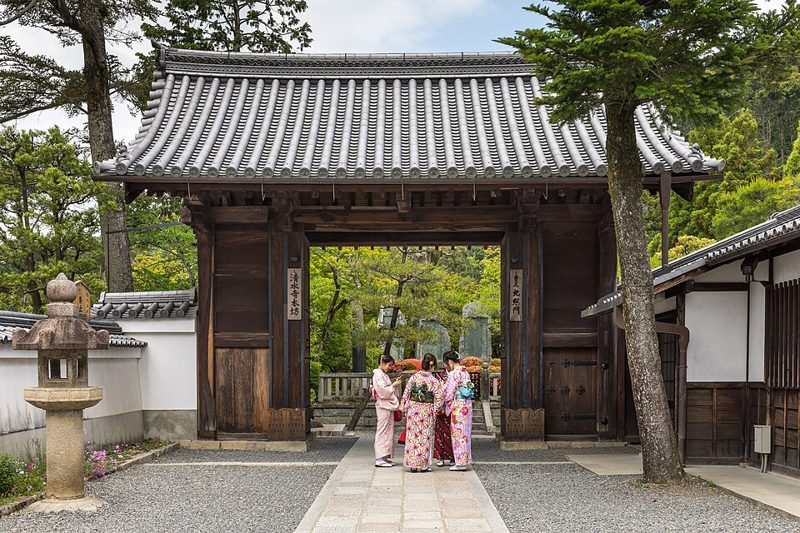
Autumn Special Night Viewing at Kiyomizu-dera Temple
- Dates
- Nov 21 (Sat) – Nov 30 (Mon)
- Hours
- 17:30 – 21:30
- Price
- ¥500
- Where
- Kiyomizu-dera Temple (Kiyomizu-Gojo)
 One more nearbyKodaiji Autumn Night Illumination
0.7 km · Oct 23 (Fri) – Dec 13 (Sun)More on Kyochika64 more · Festival & seasonal event in KyotoFree audio guidesSights in Kyoto with walk-and-talk audio guides

Look down over the autumn foliage of Kin'un Gorge from the National Treasure Main Hall.
Good to know
Special evening viewing with illuminated autumn foliage in Kin'un Gorge and the National Treasure Main Hall. Last admission at 9:00 PM; gates close at 9:30 PM.
- Dates
- Nov 21 (Sat) – Nov 30 (Mon)
- Hours
- 17:30 – 21:30
- Venue
- Kiyomizu-dera Temple
- Nearest station
- Kiyomizu-Gojo
- Admission
- ¥500
About this event
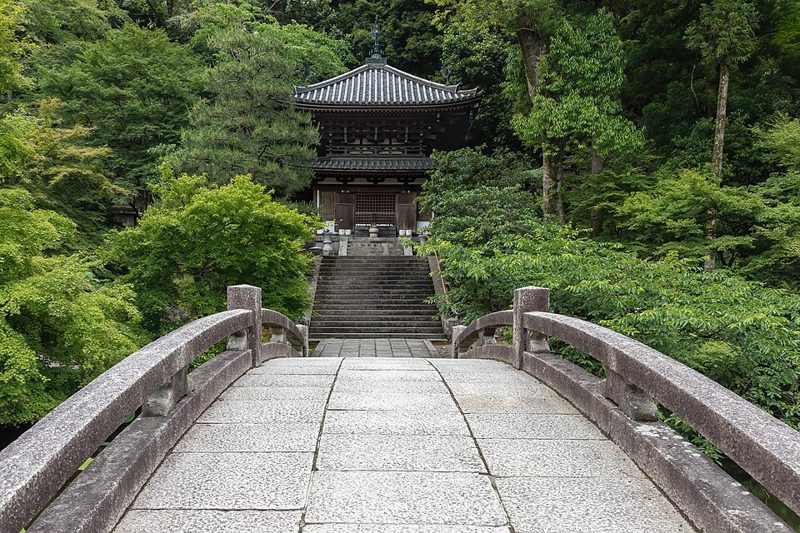
Seen from Koyasu Pagoda, the famous wooden stage of Kiyomizu-dera appears to float above a sea of autumn leaves. During the special evening opening, the illuminated foliage of Kin'un Gorge transforms the mountainside into a scene quite unlike its daytime appearance. The highlight is the contrast between looking out from the National Treasure Main Hall and viewing the hall itself from a distance. Temple buildings emerge among the trees, revealing how the architecture was built into the slope of Mount Otowa. Long revered as a place of worship dedicated to Kannon, the Buddhist deity of compassion, Kiyomizu-dera becomes a meeting point of architecture, faith and autumn colour. Be sure to admire the stage from afar as well as standing on it.
Highlights
- Look down over the autumn foliage of Kin'un Gorge from the National Treasure Main Hall.
- View the wooden stage framed by illuminated maples from Koyasu Pagoda.
- Admire temple buildings rising among the trees on Mount Otowa.
- See how the wooden stage fits into the natural mountainside.
- Good for
- For travellers who love World Heritage architecture, autumn scenery and night photography.
Good to know before you go
- Map apps may suggest paths that cannot be used to enter the grounds. Approach via Kiyomizu-zaka or Chawan-zaka.
- There is no parking on the temple grounds. Public transport is recommended.
Pochikichi's story cornerWhy was Kiyomizu-dera's famous stage built on a mountainside?
The story of Kiyomizu-dera begins in 778, before Kyoto became Japan's capital. According to temple tradition, a monk named Kenshin followed instructions received in a dream and discovered a waterfall of clear spring water on Mount Otowa. There he met the ascetic Gyoei, who entrusted him with sacred wood for a statue of Kannon. The temple's name, meaning Clear Water Temple, comes from the pure water of Otowa Falls.
Kiyomizu-dera developed into a place of worship open to ordinary people, not just the privileged. Historical writings and literature describe visitors making pilgrimages here. Its Main Hall, perched on the mountainside, is both a sacred space and an extraordinary example of architecture working with the natural landscape.
Most of the present buildings were reconstructed in 1633. The temple survived more than ten major fires and was rebuilt through the devotion of worshippers. Its 130,000-square-metre grounds contain more than 30 buildings, including National Treasures and Important Cultural Properties. In 1994, it became part of the UNESCO World Heritage listing Historic Monuments of Ancient Kyoto.
After dark, the illuminated leaves reveal how closely this temple is connected to the mountain. Looking out from the stage is only half the experience. From Koyasu Pagoda, the stage itself seems suspended within the autumn forest. That is the view worth seeking out.
Sources: Kiyomizu-dera Official Website: History (Japanese), Let's Go to Kyoto: Autumn Evening Visits and Illuminations (Japanese)
Also nearby
Within walking distance, with dates overlapping
Next stop: book for later today PR
Experiences near here you can book on Klook.
Sushi CookingHands-on sushi workshop in English→Kimono RentalKimono rental (Kyoto Aiwafuku, free hair styling)→Ad: Klook affiliate links.
🍜 Where to eat after
Restaurants near here on Google Maps→Many restaurants in Kyoto take reservations, and some are cash only. Check the restaurant page before you go.
FAQ
- What is Autumn Special Night Viewing at Kiyomizu-dera Temple?
- Seen from Koyasu Pagoda, the famous wooden stage of Kiyomizu-dera appears to float above a sea of autumn leaves. During the special evening opening, the illuminated foliage of Kin'un Gorge transforms the mountainside into a scene quite unlike its daytime appearance. The highlight is the contrast between looking out from the National Treasure Main Hall and viewing the hall itself from a distance. Temple buildings emerge among the trees, revealing how the architecture was built into the slope of Mount Otowa. Long revered as a place of worship dedicated to Kannon, the Buddhist deity of compassion, Kiyomizu-dera becomes a meeting point of architecture, faith and autumn colour. Be sure to admire the stage from afar as well as standing on it.
- When is Autumn Special Night Viewing at Kiyomizu-dera Temple?
- From Nov 21 (Sat) to Nov 30 (Mon), 2026.
- What are the opening hours?
- 17:30 – 21:30
- How much does it cost?
- ¥500
- Where is it and what is the nearest station?
- Kiyomizu-dera Temple. The nearest station is Kiyomizu-Gojo.
More in Kyoto
Festival & seasonal event
Kiyomizu-dera Jojuin Garden Special Viewing (Autumn Nights)
Jojuin, Kiyomizu-dera Temple (Kiyomizu-Gojo Sta.)
Nov 21 (Sat) – Nov 30 (Mon) 18:00 – 20:30
The garden of Jojuin, a sub-temple of Kiyomizu-dera, opens at night during the same period as the main temple's autumn night viewing. Admission closes at 8:30 PM.
Details →Art exhibition
Autumn 2026 Exhibition: Sakamoto Ryoma and the Satsuma-Choshu Alliance at Ryozen Museum of History
Ryozen Museum of History (Bakumatsu Ishin Museum) (Gion-Shijo Sta.)
Sep 16 (Wed) – Nov 23 (Mon) Last entry 17:00. Closed Mondays (open November 2 and 23)
An exhibition for the 190th anniversary of Sakamoto Ryoma's birth and the 160th anniversary of the Satsuma-Choshu Alliance. It introduces recent research that re-examines Ryoma's role using records from Satsuma, Choshu and the shogunate. The second period runs from October 27.
Details →Oct 23 (Fri) – Dec 13 (Sun) 17:00 – 22:00
See illuminated autumn gardens at Kodaiji, founded by Nene, the wife of Toyotomi Hideyoshi. Projection mapping also transforms the garden in front of the Hojo Hall. Last admission at 9:30 PM.
Details →Art exhibition
Entokuin Temple: Teikan-zu Folding Screens and Autumn Night Light-Up
Entokuin Temple (Kodaiji sub-temple) (Gion-Shijo Sta.)
Oct 23 (Fri) – Dec 13 (Sun) 10:00 – 22:00
The sub-temple of Kodaiji where Nene, the wife of Toyotomi Hideyoshi, spent her final years. It shows the Teikan-zu folding screens handed down in the Toyotomi family, and in autumn lights up its pond-stroll and dry landscape gardens at night. Lights come on at 17:00, last entry is 21:30 and the gate closes at 22:00, with no day/night changeover. Closed December 11 and 12 for temple services.
Details →Art exhibition
Chorakuji Temple Autumn Special Exhibition (with evening viewing)
Chorakuji Temple (behind Maruyama Park, Higashiyama) (Higashiyama Sta.)
Nov 1 (Sun) – Dec 13 (Sun) 10:00 – 17:00 (details on the official site)
An autumn display of temple treasures at Chorakuji, set midway along Kyoto's Higashiyama hills. See seven Important Cultural Property statues of the Jishu sect's Yugyo-shonin leaders, starting with founder Ippen, and a letter from the Ashikaga family. Evening viewing runs 6:00–8:00 PM from November 23 to December 6.
Details →Art exhibition
Kyoto Special Opening of Cultural Properties: Kushoin, a sub-temple of Kenninji
Kushoin (Kenninji sub-temple) (Gion-Shijo Sta.)
Nov 13 (Fri) – Nov 30 (Mon) Last entry 16:00
This Kenninji sub-temple opens for the autumn special openings: the abbot's hall and its garden, a statue of founder Sanko Shoeki, the study hall Koshoken, the tea room Enshu Betsugonoseki, and a painting of the Battle of Nagashino by Ukita Ikkei. About 8 minutes on foot from Gion-Shijo Station on the Keihan line.
Details →