Special Feature: Tea Utensils and Their Accompaniments (Kyoto National Museum)
- Dates
- Dec 22 (Tue) – Mar 22 (Mon)
- Hours
- 9:30 – 17:00 (Fridays until 20:00); last entry 30 min before closing
- Price
- General ¥700, university students ¥350; free for high school and under, under 18 and 70+
- Where
- Kyoto National Museum (Shichijo)
 One more nearbySpecial Exhibition: The Tale of Genji — Splendor of the Imperial Court at Kyoto National Museum
0.0 km · Oct 6 (Tue) – Nov 29 (Sun)More on Kyochika53 more · Art exhibition in KyotoFree audio guidesSights in Kyoto with walk-and-talk audio guides

National Treasure Oido Tea Bowl, Kizaemon
Good to know
A feature exhibition of tea utensils with their boxes, pouches and other accompaniments. Open until 8:00 PM on Fridays; last entry 30 minutes before closing.
- Dates
- Dec 22 (Tue) – Mar 22 (Mon)
- Hours
- 9:30 – 17:00 (Fridays until 20:00); last entry 30 min before closing
- Venue
- Kyoto National Museum
- Nearest station
- Shichijo
- Admission
- General ¥700, university students ¥350; free for high school and under, under 18 and 70+
About this event
The National Treasure Oido Tea Bowl named Kizaemon is displayed alongside objects that have protected and accompanied it through history. In Japanese tea culture, boxes and fabric pouches are important parts of a utensil's legacy. Together these accessories are called shidai. The exhibition also includes a black Raku tea bowl named Mukiguri by Chojiro and tea utensils made by Nonomura Ninsei. Instead of focusing only on ceramics, the display explores how objects were preserved and passed between owners.
Highlights
- National Treasure Oido Tea Bowl, Kizaemon
- Black Raku tea bowl Mukiguri by Chojiro
- Tea utensils by Nonomura Ninsei
- Boxes and fabric pouches that accompany tea utensils
- Good for
- For visitors interested in tea culture, Japanese ceramics and the history of treasured objects.
Good to know before you go
- University students must present student identification.
- Visitors eligible for age-based free admission must show proof of age.
- Admission includes all exhibitions in the Heisei Chishinkan building on the same day.
- Eligible disability certificate holders and one accompanying caregiver receive free admission.
Pochikichi's story cornerWhy are the boxes and fabric pouches of tea utensils treasured?
The history of a Japanese tea utensil is not recorded only in the object itself. Its protective boxes, bags and other accompanying objects have also been preserved. Together they are known as shidai.
These accessories include tomobako, boxes associated with the original maker, and shifuku, fabric pouches that could be commissioned by successive owners. They offer clues to the care and ownership of an object.
The exhibition includes the National Treasure Oido Tea Bowl named Kizaemon, held by Kohoan in Kyoto, along with works by Chojiro and Nonomura Ninsei.
When viewing these objects, pay as much attention to their boxes and pouches as to the ceramics themselves.
Sources: Kyoto National Museum: Tea Utensils and Their Accompanying Objects (Japanese)
Long ago, around hereWhat stood on the museum grounds before the modern galleries?
The Kyoto National Museum site was developed for museum use during the Meiji period. Government regulations establishing imperial museums in Tokyo, Kyoto and Nara were issued in 1889.
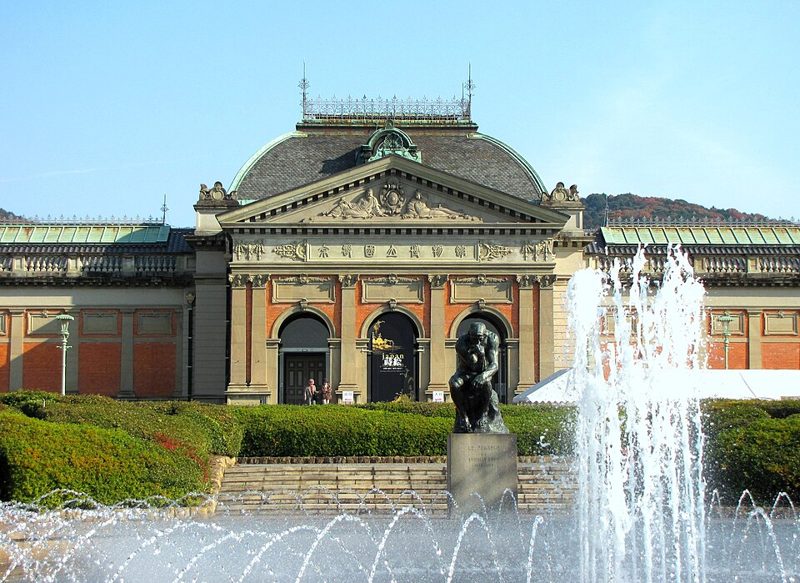
Construction of the exhibition hall designed by Tokuma Katayama began in 1892. The building was completed in 1895, and the Imperial Kyoto Museum opened in 1897.
The modern Heisei Chishinkan building, designed by Yoshio Taniguchi, opened in 2014. Walk through the grounds and compare its architecture with that of the historic Meiji Kotokan.
Sources: Kyoto National Museum: Museum Overview (Japanese), Kyoto National Museum: Buildings (Japanese)
Also nearby
Within walking distance, with dates overlapping
Next stop: book for later today PR
Experiences near here you can book on Klook.
Gion Walking TourGion and Yasaka Pagoda small-group walking tour→Sushi CookingHands-on sushi workshop in English→Ad: Klook affiliate links.
🍜 Where to eat after
Restaurants near here on Google Maps→Many restaurants in Kyoto take reservations, and some are cash only. Check the restaurant page before you go.
FAQ
- What is Special Feature: Tea Utensils and Their Accompaniments (Kyoto National Museum)?
- The National Treasure Oido Tea Bowl named Kizaemon is displayed alongside objects that have protected and accompanied it through history. In Japanese tea culture, boxes and fabric pouches are important parts of a utensil's legacy. Together these accessories are called shidai. The exhibition also includes a black Raku tea bowl named Mukiguri by Chojiro and tea utensils made by Nonomura Ninsei. Instead of focusing only on ceramics, the display explores how objects were preserved and passed between owners.
- When is Special Feature: Tea Utensils and Their Accompaniments (Kyoto National Museum)?
- From Dec 22 (Tue) to Mar 22 (Mon), 2027.
- What are the opening hours?
- 9:30 – 17:00 (Fridays until 20:00); last entry 30 min before closing
- How much does it cost?
- General ¥700, university students ¥350; free for high school and under, under 18 and 70+
- Where is it and what is the nearest station?
- Kyoto National Museum. The nearest station is Shichijo.
More in Kyoto
Art exhibition
Special Exhibition: The Tale of Genji — Splendor of the Imperial Court at Kyoto National Museum
Kyoto National Museum, Heisei Chishinkan Wing (Shichijo Sta.)
Oct 6 (Tue) – Nov 29 (Sun) 09:00 – 17:30
Open until 8:00 PM on Fridays. A major rotation of exhibits takes place on November 3. The National Treasure Tale of Genji Scrolls will be displayed during different periods depending on the scenes.
Details →Art exhibition
New Year Special Exhibition: All About Sheep — Celebrating the Zodiac at Kyoto National Museum
Kyoto National Museum, Heisei Chishinkan Wing, Gallery 2F-2 (Shichijo Sta.)
Dec 22 (Tue) – Feb 7 (Sun) 09:30 – 17:00
Discover cultural treasures featuring sheep, the zodiac animal of 2027. Open until 8:00 PM on Fridays. The same admission ticket provides access to all exhibitions in the Heisei Chishinkan Wing on the day of your visit.
Details →Festival & seasonal event
Chisan Momijitsuki: Autumn Leaves Light-up at Chishakuin
Chishakuin Temple (Shichijo Sta.)
Nov 7 (Sat) – Dec 6 (Sun) 17:00 – 21:00
A new autumn light-up at Chishakuin, head temple of the Chisan school of Shingon Buddhism. Colored maples are joined by 3,000 bamboo lanterns filling the grounds and a sea of mist clouds, created by the team behind Arashiyama Tsukitoro and Toji Tsukikairo. Last entry 8:40 PM; tickets on sale daily from 5:00 PM on the grounds.
Details →Art exhibition
Kyoto Special Opening of Cultural Properties: Kushoin, a sub-temple of Kenninji
Kushoin (Kenninji sub-temple) (Gion-Shijo Sta.)
Nov 13 (Fri) – Nov 30 (Mon) Last entry 16:00
This Kenninji sub-temple opens for the autumn special openings: the abbot's hall and its garden, a statue of founder Sanko Shoeki, the study hall Koshoken, the tea room Enshu Betsugonoseki, and a painting of the Battle of Nagashino by Ukita Ikkei. About 8 minutes on foot from Gion-Shijo Station on the Keihan line.
Details →Festival & seasonal event
Autumn Special Night Viewing at Kiyomizu-dera Temple
Kiyomizu-dera Temple (Kiyomizu-Gojo Sta.)
Nov 21 (Sat) – Nov 30 (Mon) 17:30 – 21:30
Special evening viewing with illuminated autumn foliage in Kin'un Gorge and the National Treasure Main Hall. Last admission at 9:00 PM; gates close at 9:30 PM.
Details →Art exhibition
Autumn 2026 Exhibition: Sakamoto Ryoma and the Satsuma-Choshu Alliance at Ryozen Museum of History
Ryozen Museum of History (Bakumatsu Ishin Museum) (Gion-Shijo Sta.)
Sep 16 (Wed) – Nov 23 (Mon) Last entry 17:00. Closed Mondays (open November 2 and 23)
An exhibition for the 190th anniversary of Sakamoto Ryoma's birth and the 160th anniversary of the Satsuma-Choshu Alliance. It introduces recent research that re-examines Ryoma's role using records from Satsuma, Choshu and the shogunate. The second period runs from October 27.
Details →