Sights & streets in Kyoto · Okazaki / Sakyo
Philosopher's Path
Staying nearby? Where to stay in Gion & Higashiyama for getting around →
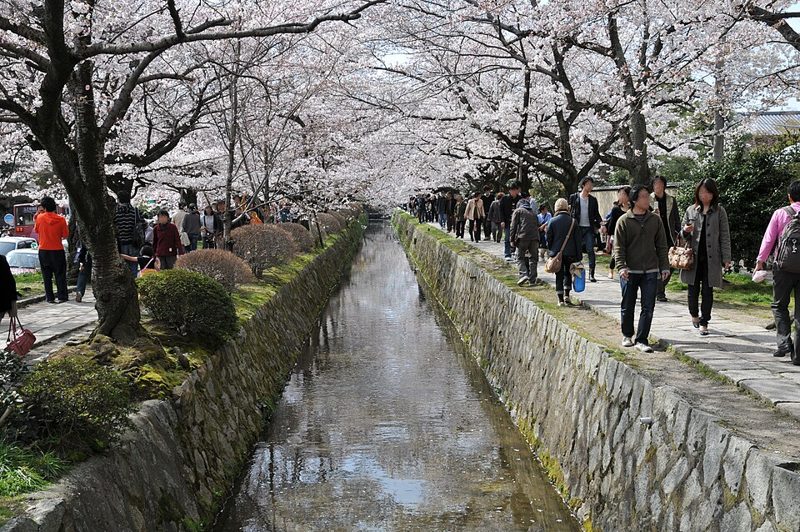
The Philosopher's Path was never intended to be a walking trail. It began as a maintenance path beside a branch of the Lake Biwa Canal, completed in 1890, and later became a favorite walking route of the philosopher Nishida Kitaro. When plans to fill in the canal emerged in 1968, local residents fought to preserve it. The peaceful path visitors enjoy today owes its existence to their efforts.
Kyochika's take
Visit Ginkaku-ji, the Silver Pavilion, first, then begin at Jodoji Bridge at the northern end and walk south toward Nyakuoji Shrine, passing the area near Honen-in Temple. Allow approximately 40–60 minutes for the walk itself, or 2–3 hours if you include nearby temples. Although famous for its cherry blossoms, the path is equally rewarding beneath summer greenery or on a quiet winter day.
Hours, admission and access
- Access
- For the northern end, take a city bus to Ginkakuji-michi. For the southern end, take a city bus to Nanzenji-Eikando-michi.
- Walking Route
- An approximately 2 km walking path following a branch of the Lake Biwa Canal between Nyakuoji Bridge and Jodoji Bridge.
- Nearest station
- Demachiyanagi
Checked against official information on 2026-10-28. Details change, so check the official website before you go.
Sources: Kyoto City Official Tourism Guide: Philosopher's Path (Japanese), Kyoto City Official Cherry Blossom Guide: Philosopher's Path (Japanese), Keihan Group: Philosopher's Path (Japanese)
 Pochikichi's story corner
How Did a Canal Path Get Its Philosophical Name?
The Philosopher's Path owes its existence to a remarkable engineering project from the Meiji period. In 1890, the first Lake Biwa Canal and its branch waterway were completed, bringing water from Japan's largest lake into Kyoto. The path visitors walk today follows an approximately 2 km stretch of that branch canal between Nyakuoji Bridge and Jodoji Bridge. The water was originally used for irrigation, fire prevention, and powering waterwheels. The canal was built to serve a modernizing city, not to provide a picturesque route for sightseeing.
The path became associated with Nishida Kitaro, a philosopher and professor at Kyoto University who was known to walk here while deep in thought. Over time, people began calling it the Path of Thought or the Philosopher's Road. The name Philosopher's Path became firmly established much later. In 1969, local residents campaigning to preserve the canal adopted the name and established the Philosopher's Path Preservation Society. What began as an industrial waterway had become a treasured part of Kyoto's cultural landscape.
The cherry trees along the path have their own human story. In 1922, the Japanese painter Hashimoto Kansetsu and his wife Yone donated 300 cherry trees to the area. Their legacy lives on in the name Kansetsu Sakura, or Kansetsu's Cherry Blossoms. In 1986, the route was selected as one of Japan's 100 Notable Roads. The Philosopher's Path is the product of modern engineering, philosophical reflection, an artist's generosity, and local preservation efforts. So, when walking beneath the cherry blossoms, remember to look at the canal flowing beside the path.
Sources: Philosopher's Path Preservation Society: About the Philosopher's Path (Japanese), Philosopher's Path Preservation Society: History of the Preservation Society (Japanese), Kyoto City Official Tourism Guide: Philosopher's Path (Japanese)
Long ago, around hereWhat Was This Area Like Before It Became a Famous Walking Path?
Before the Philosopher's Path existed, temples and small communities stood along the foothills of Kyoto's eastern mountains. During the Meiji period, the city undertook a major engineering project to bring water from Lake Biwa. The branch canal was completed in 1890, supplying water for irrigation, firefighting, and mechanical power. It became part of the infrastructure supporting Kyoto's modernization. The walking route we know today developed from a maintenance path alongside this working waterway.
As the city's needs changed, so did the canal's role. In 1968, Kyoto City proposed filling in the branch canal and replacing it with a road. Local residents organized a campaign to save the waterway and its cherry trees. The Philosopher's Path Preservation Society was founded in 1969, and negotiations eventually led to the route being restored as a pedestrian promenade. Its present appearance is not simply an accidental survival from the past. It is a landscape that local people actively chose to protect. So, as you walk from Nyakuoji Bridge to Jodoji Bridge, look not only at the cherry trees but also at the waterway preserved beside them.
Sources: Philosopher's Path Preservation Society: History of the Preservation Society (Japanese), Kyoto City Official Website: Historic Landscape Preservation and Improvement Plan (Japanese)
Lesser-Known Highlights
- Kansetsu's Cherry Blossoms
- In 1922, the painter Hashimoto Kansetsu and his wife Yone donated cherry trees to the area. Today, approximately 400 cherry trees, including Somei-Yoshino varieties, brighten the canal in spring.
- A Canal Flowing the Other Way
- The nearby Shirakawa River flows from north to south, while the artificial Lake Biwa Canal branch flows from south to north. Comparing the two reveals an intriguing feature of Kyoto's waterways.
- The Legacy of Nishida Kitaro
- The philosopher and Kyoto University professor was known for walking here while thinking. The path is an unexpected connection to the history of modern Japanese philosophy.
- A Path Saved by Residents
- When plans emerged to fill in the canal in 1968, local residents launched a preservation campaign. The promenade exists today partly because of the society founded in 1969.
- Genji Fireflies
- Genji fireflies inhabit the canal environment. Their habitat has been registered as a commemorative natural site by Kyoto City, showing that the waterway also supports local wildlife.
Sources: Philosopher's Path Preservation Society: About the Philosopher's Path (Japanese), Kyoto City Official Tourism Guide: Philosopher's Path (Japanese)
Through the seasons
- Spring
- Approximately 400 cherry trees usually bloom around early April. The Kansetsu cherry trees, descended from the donation by painter Hashimoto Kansetsu and his wife, are a signature attraction.
- Summer
- Fresh greenery, shady stretches, and waterside wildlife, including Genji fireflies, make the canal an appealing place to explore.
- Autumn
- Japanese maples and other trees change color. According to Kyoto City's autumn foliage guide, the usual viewing period is from mid-November to early December.
- Winter
- With the leaves gone, the shape of the canal and the surrounding Higashiyama landscape become easier to see.
Good to know before you go
- The Philosopher's Path connects with roads used by local residents. Walk quietly and avoid blocking access.
- Kyoto City publishes live camera views and forecasts of visitor comfort levels by time of day.
- The Philosopher's Path Preservation Society publishes information about cherry blossoms, autumn foliage, and maintenance activities.
Next stop: book for later today PR
Experiences near here you can book on Klook.
Gion Walking TourGion and Yasaka Pagoda small-group walking tour→Sushi CookingHands-on sushi workshop in English→Ad: Klook affiliate links.
🍜 Where to eat after
Restaurants near here on Google Maps→Many restaurants in Kyoto take reservations, and some are cash only. Check the restaurant page before you go.
Events nearby
Festival & seasonal event
Shinnyodo Exclusive Night Viewing
Shinnyodo (Shinsho Gokurakuji) Temple (Demachiyanagi Sta.)
Nov 18 (Wed) – Dec 8 (Tue) 17:30 – 19:30
The first night illumination of the grounds in seven years: the three-storey pagoda, stone approach and maples. Booked through JR Central's EX travel service (membership required). Main hall interior not open. Last entry 7:00 PM.
Details →Nov 20 (Fri) – Dec 6 (Sun) 10:00 – 16:30 (details on the official site)
A normally closed imperial nunnery temple in Shishigatani opens for the autumn leaves. See the large Reikanji maple, moss gardens, and a guided study hall with Kano-school paintings and palace dolls.
Details →Festival & seasonal event
Ginkakuji Autumn Special Viewing (Main Hall, Togudo, Rouseitei)
Ginkakuji Temple (Jishoji) (Ginkakuji-michi (bus stop) Sta.)
Nov 1 (Sun) – Dec 5 (Sat) 10:00 – 16:00 (details on the official site)
Guided 30-minute tours into rooms normally closed to visitors, with sliding-door paintings by Yosa Buson and Ike no Taiga and the four-and-a-half-mat Dojinsai study. Six tours a day, about 20 people each, first come first served on the day.
Details →Festival & seasonal event
Autumn Special Opening: Night Viewing at Kurodani Konkai Komyo-ji
Kurodani Konkai Komyo-ji Temple (Keage Sta.)
Nov 13 (Fri) – Dec 6 (Sun) 17:30 – 20:30
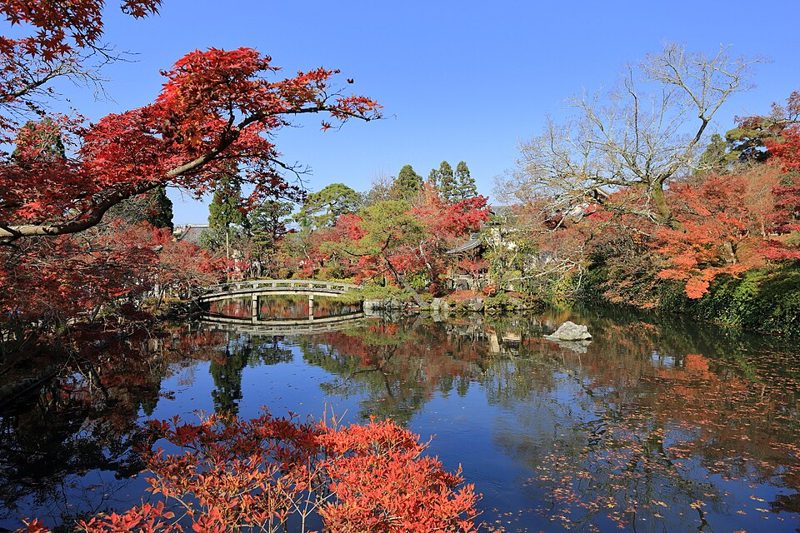
Maples reflected in the pond of the Shiun Garden, with the main hall, gate, bell tower and approach lit up. Live koto and shinobue performances three times each night. Last entry 8:00 PM.
Details →Festival & seasonal event
Eikando Autumn Illumination and Special Night Viewing
Eikando Temple (Zenrin-ji) (Keage Sta.)
Nov 20 (Fri) – Dec 6 (Sun) 17:30 – 21:00
Enjoy around 3,000 maple trees glowing with autumn colors around a traditional strolling pond garden. Last admission at 8:30 PM; lights out and gates close at 9:00 PM.
Details →Art exhibition
Sumitomo Shunsui 100th Memorial Special Exhibition: The Sumitomo Collection of Modern Art at Sen-oku Hakukokan Museum
Sen-oku Hakukokan Museum (Kyoto, Shishigatani) (Keage Sta.)
Oct 31 (Sat) – Dec 20 (Sun) Last entry 16:30. Closed Mondays (open November 23, closed November 24)
Marking 100 years since the death of Sumitomo Tomoito (Shunsui), the 15th head of the Sumitomo family, the exhibition shows the modern paintings and crafts he collected, including Claude Monet's Parc Monceau and Itaya Hazan's Important Cultural Property porcelain vase.
Details →
Tips from visitors
Been here? Leave a short tip for the next traveler — in any language. No name, no sign-up.
Thank you! We check every tip by hand and post it within a day or two.
How we post tips: we read every one before it goes up. We remove swear words, insults, ads, links and anything that could identify a person. Tips are shown in the language they were written in, with a translate link. Kyochika never writes or pays for tips, and there are no star ratings.
FAQ
- What is Philosopher's Path?
- The Philosopher's Path was never intended to be a walking trail. It began as a maintenance path beside a branch of the Lake Biwa Canal, completed in 1890, and later became a favorite walking route of the philosopher Nishida Kitaro. When plans to fill in the canal emerged in 1968, local residents fought to preserve it. The peaceful path visitors enjoy today owes its existence to their efforts.
- Access at Philosopher's Path?
- For the northern end, take a city bus to Ginkakuji-michi. For the southern end, take a city bus to Nanzenji-Eikando-michi.
- Walking Route at Philosopher's Path?
- An approximately 2 km walking path following a branch of the Lake Biwa Canal between Nyakuoji Bridge and Jodoji Bridge.