Eikando Autumn Illumination and Special Night Viewing
- Dates
- Nov 20 (Fri) – Dec 6 (Sun)
- Hours
- 17:30 – 21:00
- Price
- ¥1,000 for junior high school students and older
- Where
- Eikando Temple (Zenrin-ji) (Keage)
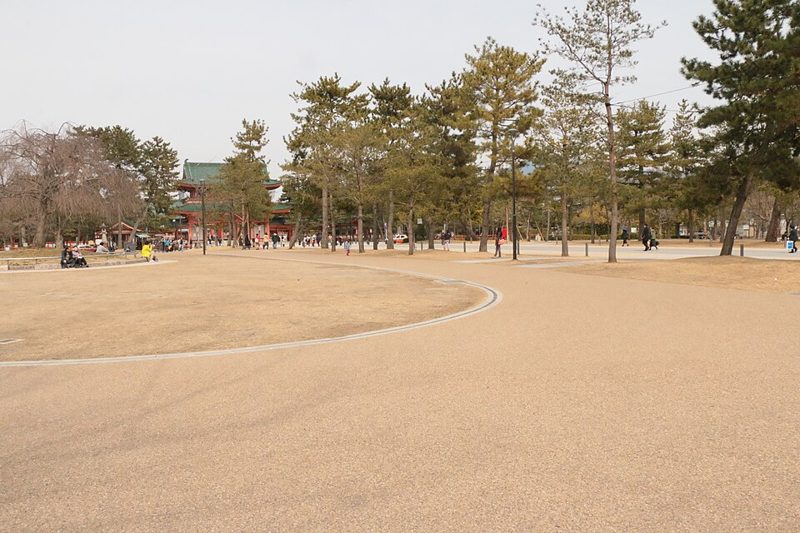 One more nearbyHeian Rakuichi Handmade Market at Okazaki Park — December 4
0.9 km · Dec 4 (Fri)More on Kyochika64 more · Festival & seasonal event in KyotoFree audio guidesSights in Kyoto with walk-and-talk audio guides

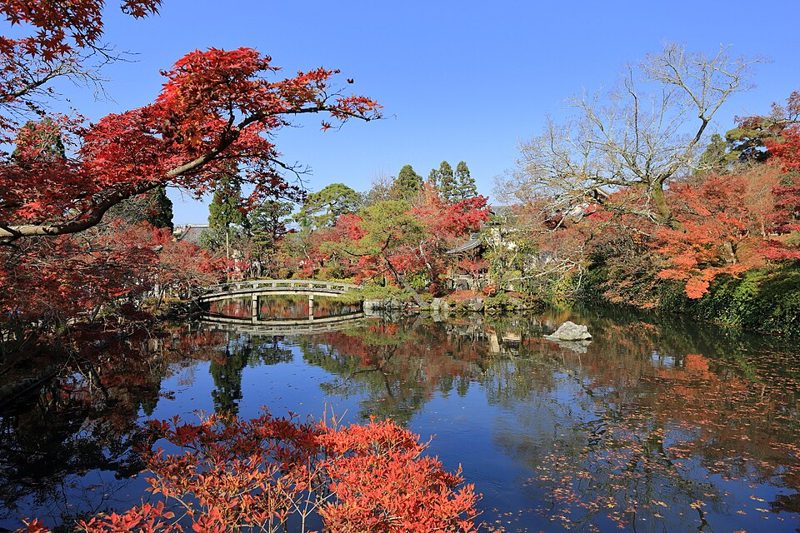
Admire around 3,000 maple trees in the strolling pond garden.
Good to know
Enjoy around 3,000 maple trees glowing with autumn colors around a traditional strolling pond garden. Last admission at 8:30 PM; lights out and gates close at 9:00 PM.
- Dates
- Nov 20 (Fri) – Dec 6 (Sun)
- Hours
- 17:30 – 21:00
- Venue
- Eikando Temple (Zenrin-ji)
- Nearest station
- Keage
- Admission
- ¥1,000 for junior high school students and older
About this event
Around 3,000 maple trees colour the strolling pond garden at Eikando, a temple so famous for autumn foliage that it is nicknamed the Temple of Maples. After dark, illuminated leaves frame the Mieido Hall and Tahoto Pagoda, giving the garden a different character. One of the pleasures is seeing temple architecture appear at different levels of the wooded hillside. Reflections in the pond add another dimension to the scenery. Originally founded as a centre of esoteric Buddhism, Eikando later became associated with Pure Land Buddhist practice. The evening visit offers a chance to discover Kyoto's religious heritage through its gardens, buildings and autumn colours.
Highlights
- Admire around 3,000 maple trees in the strolling pond garden.
- See Tahoto Pagoda rising above the illuminated foliage.
- Enjoy the garden scenery with Mieido Hall in the background.
- Discover the story of the Looking-Back Amida Buddha and the monk Yokan.
- Good for
- For garden lovers, autumn foliage enthusiasts and travellers interested in Buddhist history.
Good to know before you go
- The Nanzanji-Eikando-michi city bus stop is closed during particularly busy autumn periods.
Pochikichi's story cornerWhy is Zenrin-ji better known as Eikando?
Eikando's official name is Zenrin-ji. Its origins lie with Shinjo, a disciple of Kukai, who established the temple during the Heian period. In 863, Emperor Seiwa granted it the name Zenrin-ji. It began as a centre for Shingon esoteric Buddhism, but its later identity was shaped by the monk Yokan.
Yokan promoted the practice of chanting the name of Amida Buddha and cared for people in need. In 1097, he established Yakuoin, which included a facility for treating the sick. His compassion left such a strong impression that people gradually began calling the temple Eikando, after him.
The temple's principal image, the Looking-Back Amida, is linked to an unusual story. In 1082, while Yokan was practising Buddhist chanting, he experienced a vision of Amida turning around to look back at him. The statue's head is turned to the left, capturing that remarkable moment.
Today, visitors come for the thousands of maple trees, but Eikando's story is also about a monk who devoted himself to others. Behind the brilliant autumn colours lies a tradition of compassion and Buddhist devotion. Look beyond the leaves towards Mieido Hall and remember the story of the Looking-Back Amida.
Sources: Eikando Official Website: Temple History (Japanese), Eikando Official Website: Historical Timeline (Japanese), Kyoto City Official Tourism Guide: Eikando Illumination (Japanese)
Also nearby
Within walking distance, with dates overlapping
Next stop: book for later today PR
Experiences near here you can book on Klook.
Yuzen DyeingYuzen dyeing in a historic machiya→Kintsugi WorkshopKintsugi repair experience→Ad: Klook affiliate links.
🍜 Where to eat after
Restaurants near here on Google Maps→Many restaurants in Kyoto take reservations, and some are cash only. Check the restaurant page before you go.
FAQ
- What is Eikando Autumn Illumination and Special Night Viewing?
- Around 3,000 maple trees colour the strolling pond garden at Eikando, a temple so famous for autumn foliage that it is nicknamed the Temple of Maples. After dark, illuminated leaves frame the Mieido Hall and Tahoto Pagoda, giving the garden a different character. One of the pleasures is seeing temple architecture appear at different levels of the wooded hillside. Reflections in the pond add another dimension to the scenery. Originally founded as a centre of esoteric Buddhism, Eikando later became associated with Pure Land Buddhist practice. The evening visit offers a chance to discover Kyoto's religious heritage through its gardens, buildings and autumn colours.
- When is Eikando Autumn Illumination and Special Night Viewing?
- From Nov 20 (Fri) to Dec 6 (Sun), 2026.
- What are the opening hours?
- 17:30 – 21:00
- How much does it cost?
- ¥1,000 for junior high school students and older
- Where is it and what is the nearest station?
- Eikando Temple (Zenrin-ji). The nearest station is Keage.
More in Kyoto
Art exhibition
Sumitomo Shunsui 100th Memorial Special Exhibition: The Sumitomo Collection of Modern Art at Sen-oku Hakukokan Museum
Sen-oku Hakukokan Museum (Kyoto, Shishigatani) (Keage Sta.)
Oct 31 (Sat) – Dec 20 (Sun) Last entry 16:30. Closed Mondays (open November 23, closed November 24)
Marking 100 years since the death of Sumitomo Tomoito (Shunsui), the 15th head of the Sumitomo family, the exhibition shows the modern paintings and crafts he collected, including Claude Monet's Parc Monceau and Itaya Hazan's Important Cultural Property porcelain vase.
Details →Art exhibition
Autumn Special Exhibition 2026: Tea Culture of the Kan'ei Era (Part 2), Nomura Art Museum
Nomura Art Museum (Keage Sta.)
Oct 24 (Sat) – Dec 6 (Sun) 10:00 – 16:30 (details on the official site)
The second half of a special exhibition on tea culture in the Kan'ei era (early 17th century), with utensils linked to Kobori Enshu, Sen Sotan, Kanamori Sowa and potters such as Ninsei. Highlights include Enshu's tea scoop named 'Ryo', the Iga tea bowl named 'Suneichi' and a Daitokuji Goki tea bowl. Last entry 4:00 PM.
Details →Festival & seasonal event
Nanzen-ji Autumn Special Opening 2026: Nanzen-in Garden and Hatto Inner Hall
Nanzen-ji Temple, Nanzen-in and Hatto (Keage Sta.)
Nov 1 (Sun) – Nov 30 (Mon) Hours: Nanzen-in hours not listed by the temple (Hatto inner hall 9:00-16:00, closed 12:00-13:00)
The Nanzen-in garden, closed for a long time during landscaping work, opens for November only. The inner sanctum of the Hatto (Dharma Hall) opens Nov 16-29 (closed Nov 26).
Details →Nov 20 (Fri) – Dec 6 (Sun) 10:00 – 16:30 (details on the official site)
A normally closed imperial nunnery temple in Shishigatani opens for the autumn leaves. See the large Reikanji maple, moss gardens, and a guided study hall with Kano-school paintings and palace dolls.
Details →Nov 14 (Sat) – Nov 23 (Mon) 17:30 – 21:30
Murin-an, the former villa of statesman Yamagata Aritomo, opens at night only during the autumn leaf season. Each session includes a short talk by a garden concierge, a stroll through the illuminated garden, and cafe service with matcha or sparkling wine and original sweets. Two sessions (17:30 and 19:30) with 30 places each, booking required on a first-come basis. A day runs only if at least 14 people book. No parking.
Details →Festival & seasonal event
Autumn Special Opening: Night Viewing at Kurodani Konkai Komyo-ji
Kurodani Konkai Komyo-ji Temple (Keage Sta.)
Nov 13 (Fri) – Dec 6 (Sun) 17:30 – 20:30
Maples reflected in the pond of the Shiun Garden, with the main hall, gate, bell tower and approach lit up. Live koto and shinobue performances three times each night. Last entry 8:00 PM.
Details →