Sights & streets in Kyoto · Higashiyama / Gion
Sannenzaka and Ninenzaka Historic Streets
Staying nearby? Where to stay in Gion & Higashiyama for getting around →
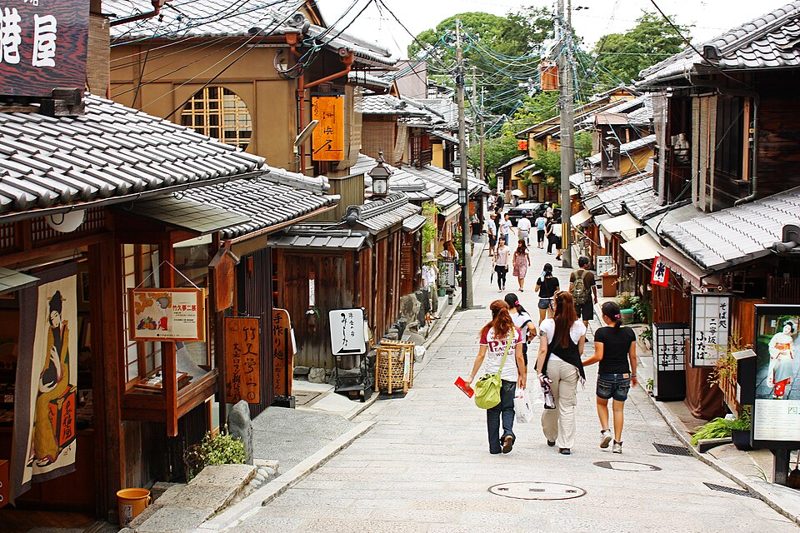
The stone-paved slopes of Sannenzaka and Ninenzaka look centuries old, but many of the traditional townhouses lining them date from the late Edo period through the Taisho era. What began as a pilgrimage route toward Kiyomizu-dera grew into a neighborhood of shops and homes. The winding streets, with Yasaka Pagoda rising beyond the rooftops, tell a story of faith, everyday trade, and Kyoto's historic urban landscape.
Kyochika's take
After visiting Kiyomizu-dera, descend Kiyomizu-zaka and continue through Sannenzaka and Ninenzaka toward Yasaka Pagoda and Kodai-ji. Allow approximately 30–45 minutes for the streets themselves, or half a day if you include Kiyomizu-dera and Kodai-ji.
Hours, admission and access
- Access
- The stone steps and paved lanes lie along the route from Kodai-ji Temple toward Kiyomizu-dera. Walk uphill through Ninenzaka and Sannenzaka to reach Kiyomizu-zaka, the approach to the temple.
- Nearest station
- Kiyomizu-gojo
Checked against official information on 2026-10-28. Details change, so check the official website before you go.
Sources: Kyoto City Official School Trip Guide: Sannenzaka and Ninenzaka (Japanese), Kyoto City Official Website: Sannenzaka Traditional Buildings Preservation District Plan (Japanese), Kyoto Travel Plus: Kyoto Visitor Etiquette (Japanese)
 Pochikichi's story corner
Why Does Sannenzaka Have a Name Associated with Childbirth?
Two famous stone-paved slopes lead toward Kiyomizu-dera: Ninenzaka, also known as Ninen-zaka, and Sannenzaka, alternatively called Sannen-zaka. One explanation for their names is that Ninenzaka was constructed in 807 and Sannenzaka in the following year. Another tradition connects Sannenzaka with the pilgrimage route to Koyasu Kannon, a Buddhist image worshipped for safe childbirth at Kiyomizu-dera. The name is thus linked to prayers for a healthy birth, although its exact historical origin remains uncertain.
These streets form part of the old pilgrimage route connecting the Kodai-ji area with Kiyomizu-dera. Stone steps and gently curving lanes are lined with traditional Kyoto townhouses, known as machiya. According to Kyoto City's preservation plan, the district includes houses with shops on the ground floor and small, closely spaced upper windows, as well as full two-story townhouses. Traditional residences, gates, and plastered walls also appear among the shops. The architecture preserves the character of a neighborhood that developed around the needs of temple visitors.
In 1976, the area was designated the Sannenzaka Preservation District for Groups of Traditional Buildings. Protection extends beyond individual historic houses to the overall streetscape: the stone pavement, steep gradients, bends in the road, continuous eaves, and walls. The district's charm lies in the way these elements fit together. So, when walking along Sannenzaka, look beyond the shop windows and notice how the sloping ground and the lines of traditional rooftops create the scene around you.
Sources: Kyoto City Official School Trip Guide: Sannenzaka and Ninenzaka (Japanese), Kyoto City Official Website: Sannenzaka Traditional Buildings Preservation District Plan (Japanese), Kyoto City Official Website: Traditional Buildings Preservation Regulations (Japanese)
Long ago, around hereWhat Were These Hillside Streets Like Long Ago?
This area has long been part of the pilgrimage route to Kiyomizu-dera. One explanation for the name Sannenzaka links it to worshippers visiting Koyasu Kannon at the temple to pray for safe childbirth. Long before today's townhouses appeared, people were already climbing these slopes toward the sacred sites of Higashiyama. Temples and religious landmarks, including Yasaka Pagoda and Kodai-ji, still punctuate the surrounding neighborhood, preserving the character of an old pilgrimage landscape.
From the late Edo period through the Taisho era, traditional townhouses and residences increasingly lined the stone steps and paved lanes, creating the historic streetscape seen today. Kyoto City's preservation plan divides the wider district into areas including Sannenzaka, Ninenzaka, the surroundings of Yasaka Pagoda, the approach to Kodai-ji, and Ishibe-koji Lane. These streets have not survived simply by chance: repairs and carefully managed architectural changes help protect their character. So, as you walk downhill through Ninenzaka, look toward Yasaka Pagoda and notice how the bends in the road frame the rows of traditional houses.
Sources: Kyoto City Official Website: Sannenzaka Traditional Buildings Preservation District Plan (Japanese), Kyoto City Official School Trip Guide: Sannenzaka and Ninenzaka (Japanese)
Lesser-Known Highlights
- The Name and Koyasu Kannon
- One theory connects the name Sannenzaka with pilgrims visiting Kiyomizu-dera's Koyasu Kannon to pray for safe childbirth. The street name may preserve a memory of this religious tradition.
- Traditional Mushiko Townhouses
- Many buildings have shops at street level and small upper-story windows in a style called mushiko-zukuri. Look up at the windows and eaves, not only at the storefronts.
- The View Toward Yasaka Pagoda
- The preservation district extends beyond the two slopes to include the streets around Yasaka Pagoda. The tower appears as a striking landmark at the end of the stone-paved streets.
- Ishibe-koji Lane
- Part of the wider preservation district, this narrow stone-paved lane features traditional residences with small front gardens and continuous stone or wooden walls, creating a quieter atmosphere than the shopping streets.
Sources: Kyoto City Official Website: Sannenzaka Traditional Buildings Preservation District Plan (Japanese), Kyoto City Official School Trip Guide: Sannenzaka and Ninenzaka (Japanese)
Good to know before you go
- The route includes stone steps and sloping stone-paved streets. Watch your footing and avoid obstructing other pedestrians.
- Shops and private homes stand side by side. Do not enter private property or block the lanes while taking photographs.
- Kyoto City carries out repair and preservation work in the district, so individual buildings may occasionally be under construction.
- The public streets and surrounding shops and temples have separate access arrangements. Check individual business hours before visiting.
Next stop: book for later today PR
Experiences near here you can book on Klook.
Gion Walking TourGion and Yasaka Pagoda small-group walking tour→Sushi CookingHands-on sushi workshop in English→Ad: Klook affiliate links.
🍜 Where to eat after
Restaurants near here on Google Maps→Many restaurants in Kyoto take reservations, and some are cash only. Check the restaurant page before you go.
Events nearby
Art exhibition
Autumn 2026 Exhibition: Sakamoto Ryoma and the Satsuma-Choshu Alliance at Ryozen Museum of History
Ryozen Museum of History (Bakumatsu Ishin Museum) (Gion-Shijo Sta.)
Sep 16 (Wed) – Nov 23 (Mon) Last entry 17:00. Closed Mondays (open November 2 and 23)
An exhibition for the 190th anniversary of Sakamoto Ryoma's birth and the 160th anniversary of the Satsuma-Choshu Alliance. It introduces recent research that re-examines Ryoma's role using records from Satsuma, Choshu and the shogunate. The second period runs from October 27.
Details →Oct 23 (Fri) – Dec 13 (Sun) 17:00 – 22:00
See illuminated autumn gardens at Kodaiji, founded by Nene, the wife of Toyotomi Hideyoshi. Projection mapping also transforms the garden in front of the Hojo Hall. Last admission at 9:30 PM.
Details →Festival & seasonal event
Kiyomizu-dera Jojuin Garden Special Viewing (Autumn Nights)
Jojuin, Kiyomizu-dera Temple (Kiyomizu-Gojo Sta.)
Nov 21 (Sat) – Nov 30 (Mon) 18:00 – 20:30
The garden of Jojuin, a sub-temple of Kiyomizu-dera, opens at night during the same period as the main temple's autumn night viewing. Admission closes at 8:30 PM.
Details →Art exhibition
Entokuin Temple: Teikan-zu Folding Screens and Autumn Night Light-Up
Entokuin Temple (Kodaiji sub-temple) (Gion-Shijo Sta.)
Oct 23 (Fri) – Dec 13 (Sun) 10:00 – 22:00
The sub-temple of Kodaiji where Nene, the wife of Toyotomi Hideyoshi, spent her final years. It shows the Teikan-zu folding screens handed down in the Toyotomi family, and in autumn lights up its pond-stroll and dry landscape gardens at night. Lights come on at 17:00, last entry is 21:30 and the gate closes at 22:00, with no day/night changeover. Closed December 11 and 12 for temple services.
Details →Festival & seasonal event
Autumn Special Night Viewing at Kiyomizu-dera Temple
Kiyomizu-dera Temple (Kiyomizu-Gojo Sta.)
Nov 21 (Sat) – Nov 30 (Mon) 17:30 – 21:30
Special evening viewing with illuminated autumn foliage in Kin'un Gorge and the National Treasure Main Hall. Last admission at 9:00 PM; gates close at 9:30 PM.
Details →Art exhibition
Chorakuji Temple Autumn Special Exhibition (with evening viewing)
Chorakuji Temple (behind Maruyama Park, Higashiyama) (Higashiyama Sta.)
Nov 1 (Sun) – Dec 13 (Sun) 10:00 – 17:00 (details on the official site)
An autumn display of temple treasures at Chorakuji, set midway along Kyoto's Higashiyama hills. See seven Important Cultural Property statues of the Jishu sect's Yugyo-shonin leaders, starting with founder Ippen, and a letter from the Ashikaga family. Evening viewing runs 6:00–8:00 PM from November 23 to December 6.
Details →
Tips from visitors
Been here? Leave a short tip for the next traveler — in any language. No name, no sign-up.
Thank you! We check every tip by hand and post it within a day or two.
How we post tips: we read every one before it goes up. We remove swear words, insults, ads, links and anything that could identify a person. Tips are shown in the language they were written in, with a translate link. Kyochika never writes or pays for tips, and there are no star ratings.
FAQ
- What is Sannenzaka and Ninenzaka Historic Streets?
- The stone-paved slopes of Sannenzaka and Ninenzaka look centuries old, but many of the traditional townhouses lining them date from the late Edo period through the Taisho era. What began as a pilgrimage route toward Kiyomizu-dera grew into a neighborhood of shops and homes. The winding streets, with Yasaka Pagoda rising beyond the rooftops, tell a story of faith, everyday trade, and Kyoto's historic urban landscape.
- Access at Sannenzaka and Ninenzaka Historic Streets?
- The stone steps and paved lanes lie along the route from Kodai-ji Temple toward Kiyomizu-dera. Walk uphill through Ninenzaka and Sannenzaka to reach Kiyomizu-zaka, the approach to the temple.