Sights & streets in Kyoto · Nijo-jo / Kyoto Imperial Palace
Nijo-jo Castle
Staying nearby? Where to stay in Karasuma Oike for getting around →
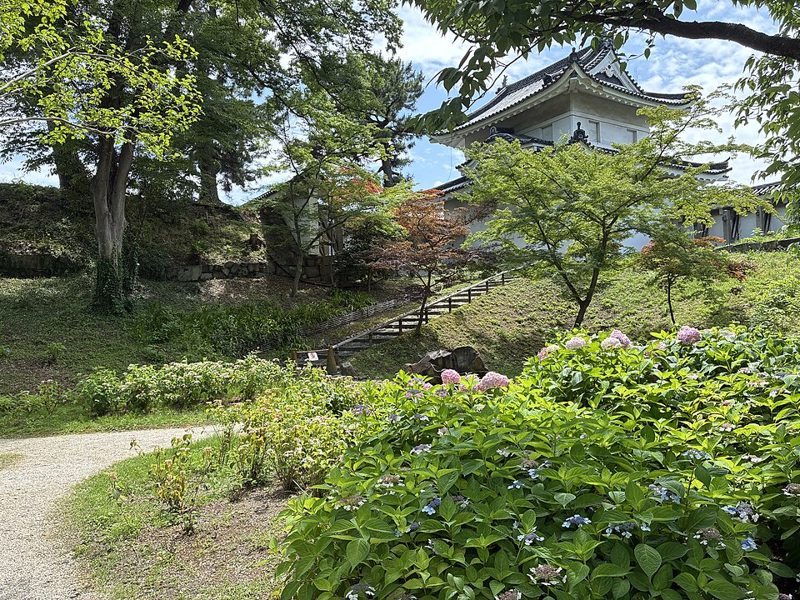
One castle witnessed both the beginning and the end of the Tokugawa shogunate. Built by Tokugawa Ieyasu in 1603, Nijo-jo became the setting where the fifteenth shogun, Tokugawa Yoshinobu, announced his intention to return political power to the emperor in 1867. Inside the National Treasure Ninomaru Palace, magnificent paintings by the Kano school and richly decorated reception rooms reveal how the shoguns displayed their authority.
Kyochika's take
Enter through the East Main Gate, then continue to the Karamon Gate, Ninomaru Palace, Ninomaru Garden, and Honmaru. This route traces the rise of Tokugawa authority and the political turning point of the late shogunate. Allow approximately 1.5–2 hours including Ninomaru Palace, and plan around your reserved entry time if visiting Honmaru Palace.
Hours, admission and access
- Hours
- Castle grounds: 8:45–17:00, with last admission at 16:00. Ninomaru Palace admission: 8:45–16:10. Honmaru Palace admission: 9:30–16:00.
- Closed
- Castle closed December 29–31. Ninomaru Palace closed on Tuesdays in January, July, August, and December; December 26–28; and January 1–3. When a Tuesday falls on a public holiday, the palace opens and closes the following day. Honmaru Palace closed on the third Monday of each month and the following day; December 26–28; and January 1–3. It remains open when these days fall on public holidays.
- Admission
- Castle grounds: adults ¥800, junior and senior high school students ¥400, elementary school students ¥300. Castle grounds plus Ninomaru Palace: adults ¥1,300, junior and senior high school students ¥400, elementary school students ¥300. Honmaru Palace: adults ¥1,000, junior and senior high school students ¥300, elementary school students ¥200, plus separate castle admission. Painting Gallery: ¥100, plus separate castle admission.
- Reservations
- No reservation required for regular castle admission. Honmaru Palace requires advance booking. Timed-entry tickets go on sale online 30 days before the visit.
- Access
- Immediately outside Tozai Subway Line Nijojo-mae, or the Nijojo-mae city bus stop.
- Nearest station
- Nijojo-mae
Checked against official information on 2026-10-28. Details change, so check the official website before you go.
Sources: Nijo-jo Castle Official Website: Hours and Closing Days (Japanese), Nijo-jo Castle Official Website: Admission Fees (Japanese), Nijo-jo Castle Official Website: Tickets (Japanese), Kyoto Travel: Nijo-jo Castle (Japanese)
 Pochikichi's story corner
Why Did the Shoguns Build a Castle in Kyoto Instead of Edo?
In 1603, Tokugawa Ieyasu built Nijo-jo to protect the Kyoto Imperial Palace and provide a residence for the shogun during visits to the imperial capital. It was far more than a military fortress. Kyoto was home to the emperor, and the castle served as a powerful statement of Tokugawa authority. Ninomaru Palace was arranged into a sequence of spaces, including the Tozamurai, Shikidai, Ohiroma, Kuroshoin, and Shiroshoin. Visitors were received in different rooms according to their rank and purpose, making architecture itself an expression of political hierarchy.
In 1626, the third shogun, Tokugawa Iemitsu, extensively renovated the castle in preparation for a visit by Emperor Go-Mizunoo. Artists including Kano Tanyu created magnificent paintings for Ninomaru Palace, and its garden was redesigned. Yet the castle did not escape disaster. Lightning destroyed the main keep in 1750, while the great Tenmei Fire of 1788 burned down Honmaru Palace. The Honmaru Palace standing today incorporates the former Katsuranomiya residence, transferred from north of the Kyoto Imperial Palace during the Meiji period.
The castle's defining political moment came in 1867, when the fifteenth shogun, Tokugawa Yoshinobu, announced his intention to return governing authority to the emperor in the Grand Hall of Ninomaru Palace. A residence built to demonstrate shogunal power thus became the setting for the end of shogunal rule. In 1884, Nijo-jo became an imperial detached palace. It was transferred to Kyoto City in 1939 and opened to the public the following year. Its official name, Moto-Rikyu Nijo-jo, preserves that imperial chapter. So, when visiting Ninomaru Palace, look carefully at the Grand Hall and the position from which the shogun addressed his audience.
Sources: Nijo-jo Castle Official Website: History and Highlights (Japanese), Kyoto City Official Website: Nijo-jo Castle (Japanese), Cultural Heritage Online: Nijo-jo Castle (Japanese)
Long ago, around hereWhat Stood Here Before the Castle?
Before Nijo-jo was built, this area occupied an important part of the ancient Heian capital. The northwestern section of today's castle grounds overlaps with the southeastern corner of the original Heian Palace complex. The northeastern area includes the site of Reizeiin, while the southwestern section overlaps with the former grounds of Shinsen-en. During the Heian period, Shinsen-en was an imperial garden used for courtly entertainment. Ieyasu therefore chose a site layered with memories of imperial residences, ceremonies, and gardens.
Construction in the early Edo period dramatically changed the neighborhood. Under Iemitsu, the castle expanded westward and acquired the double-moat layout familiar today. During the Meiji period, it became an imperial detached palace. Additional facilities were constructed for Emperor Taisho's enthronement celebrations in 1915. Seiryuen Garden was created in 1965, adding another chapter to the grounds. Nijo-jo is therefore not simply a preserved Edo-period castle: it contains traces of the ancient capital, Tokugawa government, imperial Japan, and modern Kyoto. So, as you walk around the fortifications, look beyond the Honmaru stone walls toward the northwestern grounds, where the ancient Heian Palace once extended.
Sources: Kyoto City Archaeological Research Institute: History and Location of Nijo-jo Castle (Japanese), Kyoto City Official Website: Overview of World Heritage Nijo-jo Castle (Japanese)
Lesser-Known Highlights
- Honmaru Turret Gate
- Dating from the 1626 reconstruction of the inner castle, this gate survived the devastating Tenmei Fire of 1788. It is a rare reminder of the original Honmaru complex.
- Three Islands of Ninomaru Garden
- The pond contains Horai, Crane, and Turtle islands. The garden was designed to be admired from several palace buildings during Emperor Go-Mizunoo's visit.
- Former Katsuranomiya Residence
- Today's Honmaru Palace was transferred from the Katsuranomiya imperial family residence north of the Kyoto Imperial Palace during the Meiji period. An imperial residence now stands inside a shogunal castle.
- Nijo-jo Painting Gallery
- The gallery preserves and displays original paintings from Ninomaru Palace. Visitors can appreciate the actual artworks separately from the palace interiors.
- Seiryuen Garden
- Created in 1965, this garden incorporates Warakuan and Kountei, buildings relocated from the former Suminoe family estate. It shows how Nijo-jo continued to evolve in modern times.
Sources: Kyoto City Official Website: Nijo-jo Castle (Japanese), Kyoto City Official Website: Overview of World Heritage Nijo-jo Castle (Japanese), Kyoto Travel: Nijo-jo Castle (Japanese)
Through the seasons
- Spring
- Approximately 300 cherry trees representing around 50 varieties, including double-flowered and weeping cherries, bloom around the castle. Spring cherry blossom festivals and illuminations are held.
- Summer
- From July 15 to September 27, 2026, special summer activities include access to the third chamber of the Grand Hall in Ninomaru Palace and explanations of its paintings.
- Autumn
- The Nijo-jo Festival runs from October 23 to December 6, 2026. Nighttime illuminations are held from October 23 to December 5.
- Winter
- The castle closes December 29–31. Ninomaru Palace is also closed December 26–28 and January 1–3.
Good to know before you go
- Photography is prohibited inside Ninomaru Palace and Honmaru Palace.
- Honmaru Palace requires a timed-entry advance reservation and a separate admission ticket.
- Honmaru Palace is approximately 15–20 minutes on foot from the East Main Gate, so allow enough time before your reservation.
- Eating and drinking are generally prohibited within the castle grounds except in designated areas.
Next stop: book for later today PR
Experiences near here you can book on Klook.
Castle AdmissionNijo Castle admission and guided tour→Nishiki Food TourNishiki Market 3-hour food walking tour→Ad: Klook affiliate links.
🍜 Where to eat after
Restaurants near here on Google Maps→Many restaurants in Kyoto take reservations, and some are cash only. Check the restaurant page before you go.
Events nearby
Art exhibition
NAKED meets Nijo Castle 2026 at Former Imperial Villa Nijo Castle
Former Imperial Villa Nijo Castle (Nijojo-mae Sta.)
Oct 23 (Fri) – Dec 5 (Sat) 18:00 – 22:00
A night art exhibition marking 400 years since the Kan'ei imperial visit, exploring the aesthetics of Kan'ei-era culture that shaped kimono and everyday design. Inspired by the sensibility of Tokugawa Kazuko, it reinterprets traditional beauty as artworks, with audio guides in Japanese and English. Last entry 9:00 PM; open daily, rain or shine. Students and Kyoto City residents get a 500 yen cashback on site.
Details →Festival & seasonal event
Nijo Castle Festival 2026 (daytime program) at Former Imperial Villa Nijo Castle
Former Imperial Villa Nijo Castle (Nijojo-mae Sta.)
Oct 23 (Fri) – Dec 6 (Sun) 08:45 – 17:00 (details on the official site)
Autumn at the World Heritage castle: a foliage stamp rally at four spots through Dec 6, guided tours of the Kamo seven stones (Nov 15), and a Nov 23 program with a miniature imperial procession and a kimono runway. The evening light-up is a separate event, NAKED meets Nijo Castle 2026.
Details →Art exhibition
Nijo Castle Wall Paintings: Original Works, Winter Display (Kuroshoin First and Second Rooms)
Nijo Castle Wall Paintings Exhibition and Storage Hall (Nijojo-mae Sta.)
Nov 19 (Thu) – Jan 17 (Sun) 09:00 – 16:45 (details on the official site)
The original wall paintings of Nijo Castle are shown in rotation at this storage hall inside the castle grounds. The winter display, running 57 days, presents the originals from the first and second rooms of the Kuroshoin.
Details →Art exhibition
Mariko Mori: Shrine II — Topology of Inner Light (Time-Do Gallery)
Time-Do Gallery (Marutamachi Sta.)
Nov 6 (Fri) – Mar 31 (Wed) 11:00 – 18:00 (details on the official site)
In two connected Taisho-era townhouses southwest of the Kyoto Imperial Palace, Mariko Mori shows her installation Shrine II and eight hanging scrolls. The work pays homage to the sacred stone beneath Mizuya Shrine, a sub-shrine of Kasuga Taisha.
Details →Festival & seasonal event
Koseiji Temple Autumn Special Opening with Night Viewing
Koseiji Temple (Nijo Sta.)
Nov 21 (Sat) – Nov 23 (Mon) 18:00 – 20:00
The evening session of Koseiji Temple's three-day autumn special opening in Kamigyo Ward. A tea service is offered for ¥800; last entry at 7:30 PM.
Details →Art exhibition
KYOTO Ekinaka Art Project 2026 (Student Art in Subway Stations) at 11 Kyoto City Subway stations
11 Kyoto City Subway stations (Karasuma Oike and others) (Karasuma Oike Sta.)
Nov 20 (Fri) – Jan 27 (Wed) Hours: please check with the organizer
Students from 13 Kyoto universities install works on the theme UPDATE in 11 subway stations, with a keyword rally across the stations.
Details →
Tips from visitors
Been here? Leave a short tip for the next traveler — in any language. No name, no sign-up.
Thank you! We check every tip by hand and post it within a day or two.
How we post tips: we read every one before it goes up. We remove swear words, insults, ads, links and anything that could identify a person. Tips are shown in the language they were written in, with a translate link. Kyochika never writes or pays for tips, and there are no star ratings.
FAQ
- What is Nijo-jo Castle?
- One castle witnessed both the beginning and the end of the Tokugawa shogunate. Built by Tokugawa Ieyasu in 1603, Nijo-jo became the setting where the fifteenth shogun, Tokugawa Yoshinobu, announced his intention to return political power to the emperor in 1867. Inside the National Treasure Ninomaru Palace, magnificent paintings by the Kano school and richly decorated reception rooms reveal how the shoguns displayed their authority.
- Hours at Nijo-jo Castle?
- Castle grounds: 8:45–17:00, with last admission at 16:00. Ninomaru Palace admission: 8:45–16:10. Honmaru Palace admission: 9:30–16:00.
- Closed at Nijo-jo Castle?
- Castle closed December 29–31. Ninomaru Palace closed on Tuesdays in January, July, August, and December; December 26–28; and January 1–3. When a Tuesday falls on a public holiday, the palace opens and closes the following day. Honmaru Palace closed on the third Monday of each month and the following day; December 26–28; and January 1–3. It remains open when these days fall on public holidays.
- Admission at Nijo-jo Castle?
- Castle grounds: adults ¥800, junior and senior high school students ¥400, elementary school students ¥300. Castle grounds plus Ninomaru Palace: adults ¥1,300, junior and senior high school students ¥400, elementary school students ¥300. Honmaru Palace: adults ¥1,000, junior and senior high school students ¥300, elementary school students ¥200, plus separate castle admission. Painting Gallery: ¥100, plus separate castle admission.
- Reservations at Nijo-jo Castle?
- No reservation required for regular castle admission. Honmaru Palace requires advance booking. Timed-entry tickets go on sale online 30 days before the visit.
- Access at Nijo-jo Castle?
- Immediately outside Tozai Subway Line Nijojo-mae, or the Nijojo-mae city bus stop.