Akihabara guide: history, hidden spots and events nearby
A burnt-out field where a fire-protection deity was enshrined became a radio-parts market, then a town of home appliances and PCs, and finally a town of anime and games. Around JR Akihabara Station, about 1,000 electronics shops were once packed into roughly 1 km². On Sunday afternoons the main street, Chuo-dori, becomes a pedestrian zone.
Kyochika's tips
- Our recommendation: come on a Sunday afternoon for the pedestrian zone. You can stand in the middle of car-free Chuo-dori and look up at the giant anime and game signs.
- To see what is left of the electric town, start at Radio Center under the tracks by the station. Its narrow aisles of tiny vacuum-tube and parts stalls are arguably where today's Akihabara began. End with a walk to Kanda Myojin, the district's guardian shrine.
Events near Akihabara now and coming up
Within 1.5 km, nearest first. Checked against official pages.
 Lycoris Recoil Café LycoReco Branch 2026 POP UP SHOP in atre AkihabaraOct 16 (Fri) – Oct 29 (Thu) · atre Akihabara 1, 2F special venue · on site
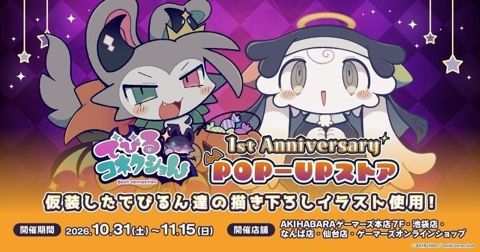 Devil Connection 1st Anniversary POP-UP Store (AKIHABARA Gamers Main Store)Oct 31 (Sat) – Nov 15 (Sun) · AKIHABARA Gamers Main Store 7F · 0.2 km
 Group Show "Anata no Kokoro ni Hibike vol.1: Minerals" (2k540 AKI-OKA ARTISAN)Oct 29 (Thu) – Nov 1 (Sun) · 2k540 AKI-OKA ARTISAN Multi Space (C-1) · 0.7 km
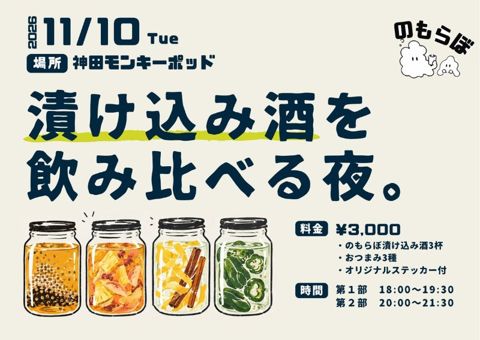 Nomolabo: A Night of Tasting Infused LiquorsNov 10 (Tue) · Kanda Monkey Pod · 0.8 km
 Storytime at Kanda Machikado Library (November)Nov 29 (Sun) · Kanda Machikado Library (in Kanda Sakura-kan) · 0.8 km · free
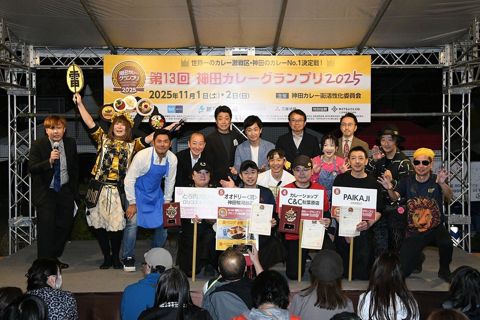 14th Kanda Curry Grand Prix 2026 — FinalOct 31 (Sat) – Nov 1 (Sun) · Ogawa Hiroba (Chiyoda City) · 0.8 km
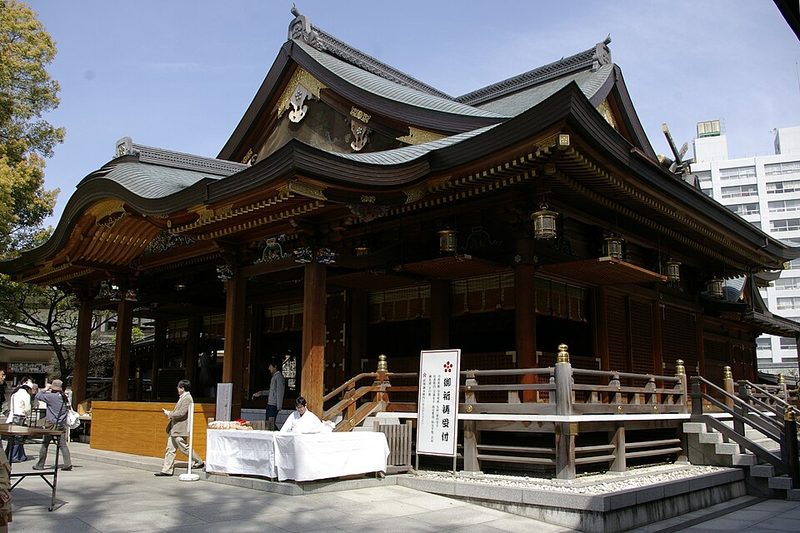 48th Bunkyo Chrysanthemum FestivalNov 1 (Sun) – Nov 23 (Mon, holiday) · Yushima Tenmangu Shrine · 1.1 km
- Tamba City Products Fair (Bunkyo Chrysanthemum Festival)Nov 14 (Sat) – Nov 15 (Sun) · Yushima Tenmangu Shrine · 1.1 km
 Aoi Hiiragi Pop-Up Shop (Ueno Marui)Oct 30 (Fri) – Nov 8 (Sun) · Ueno Marui 5F · 1.2 km · free
 Yume Neko Cat Adoption Event (Nihonbashi Kobunacho, Nov 8)Nov 8 (Sun) · Ibasen Building 7F (Nihonbashi Kobunacho) · 1.2 km
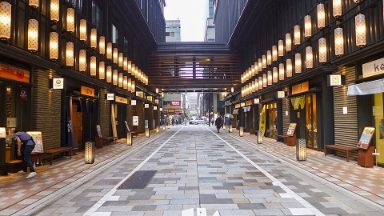 54th OLD NEW MARKET in NihonbashiNov 14 (Sat) – Nov 15 (Sun) · COREDO Muromachi Naka-dori · 1.3 km
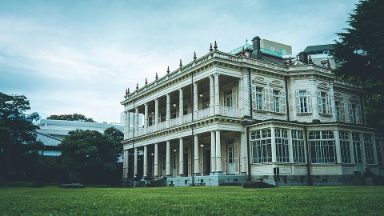 Kyogen on the Lawn at Kyu-Iwasaki-tei GardensNov 14 (Sat) · Kyu-Iwasaki-tei Gardens (lawn by the Western-style house) · 1.3 km
Visiting info
| Location | Sotokanda, Chiyoda-ku, Tokyo (west side of JR Akihabara Station) |
|---|---|
| Getting there | Akihabara Station: JR Yamanote, Keihin-Tohoku and Sobu lines, Tokyo Metro Hibiya Line, Tsukuba Express. About 5 min walk from the Electric Town exit |
| Shop hours | Vary by shop, floor and building (check each shop's official site) |
| Pedestrian zone | Sundays, on Chuo-dori from Sotokanda 5-chome to Manseibashi intersections (about 570 m). April–September 13:00–18:00, October–March 13:00–17:00. May be canceled for rain, strong wind or a bad forecast |
| Admission | Free to walk around |
Checked on 2026-10-27 against the official pages. Hours and fees can change; please check before you go.
Sources: GO TOKYO「秋葉原電気街」 (Japanese) / 警視庁「歩行者用道路(歩行者天国)」 (Japanese)
What was Akihabara originally?
In the Edo period, boats on the Kanda River unloaded rice, vegetables, lumber, firewood and charcoal at wharves along its banks. In 1869 the Kanda Aioi-cho fire destroyed 1,100 houses, and Tokyo set aside about 9,000 tsubo of firebreak land. A fire-quelling shrine, the Chinka-sha, was placed there, and people came to know it as Akiba Gongen, after the Akiha Shrine in Hamamatsu.
On November 1, 1890, Akihabara opened as a freight station of the Nippon Railway. After readings such as "Akiha-no-hara" and "Akibappara," the name settled as "Akihabara" in 1911. Passenger service only began on November 1, 1925; for the 35 years before that, it was a major freight hub. Because the station was built on the shrine grounds, the shrine moved about 3 km north to Matsugaya in Taito ward.
The electric town began in 1933, when the wholesalers Hirose Shokai and Yamagiwa Denki Shokai moved in. After the war, electrical stalls in Kanda moved to the station area when GHQ ordered street stalls cleared (1950–1951), and shared buildings such as Radio Center were built. Through the 'three sacred treasures' appliances of the late 1950s, color TVs in the late 1960s, VCRs and microcomputers in the late 1970s and PCs in the Heisei era, it became the anime and game town known worldwide today.
Sources: nippon.com「秋葉原:「火除の神」秋葉権現が駅名の起源」 (Japanese) / 三井住友トラスト不動産「このまちアーカイブス 神田の専門店街の歴史」 (Japanese)
Why "Akihabara" and not "Akibahara"
The name comes from "Akiha," the Akiha Shrine in Hamamatsu. From the late 1870s, maps began to show the Chinka-sha as a small Akiha shrine.
People called the firebreak field "Akiha-no-hara" or "Akibappara," and the station's reading settled as "Akihabara" in 1911. Today's nickname "Akiba" may actually be closer to the old way of saying it.
Sources: nippon.com「秋葉原:「火除の神」秋葉権現が駅名の起源」 (Japanese)
Nearly half of Tokyo's rice arrived here
After the station opened, a canal was dug from the Kanda River into the station grounds so cargo could move straight from boats to freight cars. A 1921 record says 45% of the rice shipped to Tokyo by rail arrived at Akihabara.
The Kanda vegetable market, burned in the Great Kanto Earthquake, moved to the site of today's Akihabara UDX in the early Showa era and moved on to Ota ward in 1990. Before it was an electric town, this was the entrance to Tokyo's kitchen.
Sources: nippon.com「秋葉原:「火除の神」秋葉権現が駅名の起源」 (Japanese)
Students built and sold radios
After the war, stalls lined Tokyo's main streets. Around 1950, about 50 of the roughly 120 stalls between Ogawamachi and Kanda-Surugadai sold electrical goods.
Students of the Denki Gakko (today's Tokyo Denki University) assembled and sold radios as a side job, and vacuum tubes sold well. The stalls moved to Akihabara because GHQ ordered street stalls cleared in 1950–1951.
Sources: 三井住友トラスト不動産「このまちアーカイブス 神田の専門店街の歴史」 (Japanese)
The pedestrian zone stopped for two and a half years
Akihabara's pedestrian zone was halted after an incident in June 2008.
When it returned on a trial basis on January 23, 2011, it was 500 m long, about 300 m shorter than before. Today it runs on Sundays along about 570 m of Chuo-dori.
Sources: ASCII.jp「2年半ぶりに秋葉原の歩行者天国が期間限定で復活」 (Japanese) / AKIBA PC Hotline!「秋葉原の歩行者天国が復活」 (Japanese) / 警視庁「歩行者用道路(歩行者天国)」 (Japanese)
Kanda Myojin sells an IT charm
Kanda Myojin is said to have been founded in 730 near today's Otemachi. In 1616 it moved to its present site to guard the northeast of Edo Castle and was named Edo's chief guardian shrine.
It is the guardian shrine of 108 neighborhoods including Akihabara, and offers an "IT information security" charm for computers and smartphones. A fitting charm for an electric town's shrine.
Sources: ニッポン旅マガジン「神田明神」 (Japanese) / GO TOKYO「神田明神」 (Japanese)
Getting there by taxi and bus
🚕 Taxi
- Akihabara Station, Electric Town Gate (north side) After the gate, turn right toward the UDX / Animate side; there is a taxi stand.
- Akihabara Station, Central Gate (to the left) Turn left after the Central Gate for the bus and taxi stands.
🚌 Bus
- Akihabara Station (秋葉原駅前), stop 1 Toei Bus 茶51 for Komagome Station South Exit
- Akihabara Station (秋葉原駅前), stop 2 Toei Bus 秋26 for Kasai Station
- Iwamotocho Station (岩本町駅前), stop 3 Toei Bus 秋26 for Kasai Station
- Sudacho (須田町), stops 4-5 Toei Bus 秋26 for Kasai Station / Akihabara Station (weekdays and Saturdays only)
- Manseibashi (万世橋), stops 7-8 Toei Bus 茶51 for Akihabara Station / Komagome Station South Exit
Walking times to the stops are not given on the official page. You can also book a taxi by app: GO works in English with foreign phone numbers and cards, Uber books licensed taxis in Tokyo, and since early 2026 visitors can call S.RIDE taxis through DiDi in the 23 wards and nearby.
Sources: Akihabara Business Center (English) / Toei Bus stop guide (Japanese) / GO TOKYO: Buses (Japanese) / Japan Taxi Apps for Tourists (Oct 12, 2026)
Our suggested route
- Akihabara Station, Electric Town exit Right outside, go into Akihabara Radio Center under the tracks and browse the tiny parts stalls (about 15 min).
- Chuo-dori The main street of anime, game and figure shops. Car-free on Sunday afternoons (about 30 min).
- Akihabara Radio Kaikan The building that has carried the electric-town name since 1950, with hobby shops on each floor (about 20 min).
- Kanda Myojin About 7 min walk from Akihabara Station. Pay your respects and look at the IT charm (about 20 min).
- mAAch ecute Kanda Manseibashi and Yanagimori Shrine Walk down to Manseibashi for the 1912 Staircase and the platform deck, see the tanuki at Yanagimori Shrine by the Kanda River, then return to the station (about 30 min).
We found no source giving walking times. The times in brackets are our estimate; the whole route takes about 2 hours. Shop hours vary.
Sources: GO TOKYO「秋葉原電気街」 (Japanese) / Visit Chiyoda「神田神社(神田明神)」 (Japanese) / nippon.com「赤レンガアーチの旧「万世橋駅」」 (Japanese) / 三井住友トラスト不動産「このまちアーカイブス 神田の専門店街の歴史」 (Japanese)
What to see by season
| Every Sunday | Pedestrian zone on Chuo-dori (April–September 13:00–18:00, October–March 13:00–17:00) |
|---|---|
| May (odd-numbered years) | Kanda Matsuri. A procession of several thousand people covers about 30 km, and Akihabara fills with portable shrines, bearers and spectators. The next one is expected in 2027; we will add the dates when announced |
| New Year | First shrine visit at Kanda Myojin. We will add the 2027 details when announced |
Sources: 警視庁「歩行者用道路(歩行者天国)」 (Japanese) / GO TOKYO「神田明神」 (Japanese)
Akihabara or Nakano Broadway?
Nakano Broadway opened in 1966 as Japan's first combined commercial and residential building, with more than 200 shops from B1 to the 4th floor. Its niche shops, which multiplied from the 1980s, are said to carry rarer stock than Akihabara.
Our take: for big shops with the newest titles and the buzz of a whole district, Akihabara; for digging through vintage finds under one roof, Nakano Broadway. Akihabara and Nakano are on the same JR Sobu Line, so you can do both in a day.
Sources: GLTJP「中野ブロードウェイ」 (Japanese) / GO TOKYO「秋葉原電気街」 (Japanese)
Nearby: combine with
- Kanda Myojin About 7 min on foot from the Electric Town exit. After your visit, continue toward Yushima or Ochanomizu.
- 2k540 AKI-OKA ARTISAN About 6 min from Akihabara Station. Walk under the tracks to Okachimachi and on toward Ueno.
- mAAch ecute Kanda Manseibashi At the foot of Manseibashi bridge. Take a break at the café on the old platform and watch the trains.
Sources: Visit Chiyoda「神田神社(神田明神)」 (Japanese) / タイムアウト東京「2k540 AKI-OKA ARTISAN」 (Japanese) / nippon.com「赤レンガアーチの旧「万世橋駅」」 (Japanese)
Little-known spots
- Akihabara Radio Center
- Opened in 1949 under the girders of the Chuo-Sobu Line and still full of electronic-parts shops. One of the origins of the electric town.
- Akihabara Radio Kaikan
- Started in 1950 as a two-story wooden building, became eight stories in 1972, and was rebuilt as the current building in 2014.
- mAAch ecute Kanda Manseibashi
- The site of Manseibashi Station, opened in 1912. You can see the original "1912 Staircase" and an observation deck on the old platform with trains running on both sides. Opened in September 2013.
- Yanagimori Shrine's tanuki
- Said to have been founded in 1458 by Ota Dokan to guard Edo Castle's unlucky northeast. The tanuki (raccoon dog) at its Fukuju Shrine is linked to the phrase "stand out from others," and there are parent-and-child tanuki charms.
- 2k540 AKI-OKA ARTISAN
- A cluster of craft shops under the elevated tracks between Akihabara and Okachimachi. About 6 min walk from Akihabara Station; 11:00–19:00, closed Wednesdays.
Sources: 三井住友トラスト不動産「このまちアーカイブス 神田の専門店街の歴史」 (Japanese) / nippon.com「赤レンガアーチの旧「万世橋駅」」 (Japanese) / ニッポン旅マガジン「柳森神社」 (Japanese) / タイムアウト東京「2k540 AKI-OKA ARTISAN」 (Japanese)
FAQ
What are the opening hours of Akihabara?
Sotokanda, Chiyoda-ku, Tokyo (west side of JR Akihabara Station)
How much does Akihabara cost?
Free to walk around
How do I get to Akihabara?
Akihabara Station: JR Yamanote, Keihin-Tohoku and Sobu lines, Tokyo Metro Hibiya Line, Tsukuba Express. About 5 min walk from the Electric Town exit
What was Akihabara originally?
In the Edo period, boats on the Kanda River unloaded rice, vegetables, lumber, firewood and charcoal at wharves along its banks. In 1869 the Kanda Aioi-cho fire destroyed 1,100 houses, and Tokyo set aside about 9,000 tsubo of firebreak land. A fire-quelling shrine, the Chinka-sha, was placed there, and people came to know it as Akiba Gongen, after the Akiha Shrine in Hamamatsu.
What are some little-known spots in Akihabara?
Akihabara Radio Center, Akihabara Radio Kaikan, mAAch ecute Kanda Manseibashi, Yanagimori Shrine's tanuki, 2k540 AKI-OKA ARTISAN.