Temples in Kyoto · Rakuhoku
Ryoan-ji Temple
Staying nearby? Where to stay in Arashiyama for getting around →
Fifteen rocks rest on a field of white gravel. What they represent remains an open question. Neither the creator nor the precise date of Ryoan-ji's famous rock garden is firmly established. This uncertainty is part of its fascination: visitors from around the world sit before the stones, looking for meanings of their own.
Kyochika's take
Begin with Kyoyochi Pond before entering the main hall. Once you reach the rock garden, sit for a while before reading the explanations and see what you notice for yourself. Allow 45–60 minutes for the grounds. Ryoan-ji also combines well with Kinkaku-ji and Ninna-ji for a journey through the temple culture of Kyoto's northwestern hills.
Hours, admission and access
- Hours
- March–November: 8:00–17:00. December–February: 8:30–16:30.
- Closed
- Open daily.
- Admission
- Adults ¥600; high school students ¥500; elementary and junior high school students ¥300.
- Access
- Approximately 8 minutes on foot from Randen Ryoanji. Approximately 1 minute on foot from the Ryoanji-mae city bus or JR bus stop.
- Nearest station
- Ryoanji
Checked against official information on 2026-10-28. Details change, so check the official website before you go.
Sources: Kyoto Prefecture Tourism Federation: Ryoan-ji (Japanese), Kyoto City Official Tourism Guide: Ryoan-ji (Japanese), Ryoan-ji: Geographic Location Data (Japanese)
 Pochikichi's story corner
Who Placed the Fifteen Stones, and What Do They Mean?
Ryoan-ji was founded in 1450 by Hosokawa Katsumoto, a powerful military leader who served as kanrei, a senior official of the Muromachi shogunate. Katsumoto acquired a former villa belonging to the Tokudaiji aristocratic family and invited the Zen priest Giten Gensho to establish a temple. The complex was subsequently destroyed during the Onin War. Katsumoto's son, Hosokawa Masamoto, restored it, and a new main hall is said to have been built in 1499. Some theories place the creation of the rock garden around this period.
The garden occupies a rectangular space south of the main hall. Fifteen stones of varying sizes are arranged on carefully raked white gravel. It is sometimes called the 'Tiger Cubs Crossing Garden,' but no definitive record identifies its designer or establishes exactly when it was made. There are several interpretations of the arrangement, and none can be accepted as the single proven explanation. Rather than filling the landscape with flowers or trees, the garden suggests nature through only rocks, gravel, and empty space, a characteristic of Zen garden design.
In 1797, a fire destroyed the main hall, Founder's Hall, and Buddha Hall. The present main hall was relocated from Saigen-in, one of the temple's subsidiary temples. Ryoan-ji was inscribed on the UNESCO World Heritage List in 1994. Instead of memorizing an explanation of what the garden supposedly means, try sitting quietly on the veranda and noticing how your eyes travel between the stones. The spaces between them are just as important as the rocks themselves. So, rather than simply counting the fifteen stones, look at the relationships between the rock formations and the expanses of white gravel.
Sources: Kyoto City Official Tourism Guide: Ryoan-ji (Japanese), Kyoto Prefecture Tourism Federation: Ryoan-ji (Japanese), Kyoto City Museum Network: Ryoan-ji (Japanese)
Long ago, around hereWhat Was Here Before the Zen Temple?
Before Ryoan-ji became a Zen temple, this was the site of a villa belonging to the Tokudaiji family. Kyoyochi Pond, now known alongside the rock garden, dates back to that earlier estate. The pond was also called Oshidori-ike, or Mandarin Duck Pond, because of the ducks that gathered there. Long before the rock garden became the temple's defining image, the property was a spacious landscape centered on water. The villa of a court noble eventually passed into the hands of a warrior family and was transformed into a Zen monastery.
After the Onin War, Hosokawa Masamoto restored the temple. Later, Ryoan-ji received land donations from Toyotomi Hideyoshi and the Tokugawa family, and at its height it reportedly had 23 subsidiary temples. But the devastating fire of 1797 destroyed major buildings, and the complex never fully returned to its earlier scale. The present grounds preserve a remarkable combination: a pond originating before the temple, a Zen rock garden associated with the Muromachi period, and a main hall relocated after a later disaster. That is why, after seeing the famous stones, you should visit Kyoyochi Pond and imagine the aristocratic villa that once stood here.
Sources: Kyoto City Official Tourism Guide: History of Ryoan-ji (Japanese), Kyoto City Museum Network: Ryoan-ji (Japanese)
Lesser-Known Highlights
- Kyoyochi Pond
- Older than the rock garden, this pond survives from the Tokudaiji family's estate. It was once known as Mandarin Duck Pond because of the birds that gathered here.
- Tsukubai Stone Basin
- A stone water basin whose characters form the phrase 'I learn only to be content.' Traditionally associated with a donation by Tokugawa Mitsukuni, the story is part of the temple's inherited lore.
- Wabisuke Camellia
- A camellia traditionally said to have been admired by Toyotomi Hideyoshi. Its historical association offers a very different attraction from the abstract composition of the rock garden.
- Ryoanji-gaki Fences
- Distinctive traditional fences found along the approach and near the eastern garden of the main hall. Look at how these boundaries shape the relationship between architecture and landscape.
- Tactile Miniature Rock Garden
- A model that allows visitors with visual impairments to understand the arrangement of the stones through touch. Braille guidance is also provided inside the building.
Sources: Kyoto Prefecture Tourism Federation: Ryoan-ji (Japanese), Kyoto City Museum Network: Ryoan-ji (Japanese), Kyoto City Official Tourism Guide: Ryoan-ji (Japanese)
Good to know before you go
- Neither the designer nor the precise date of the rock garden is definitively known, and there is no single established interpretation of its arrangement.
- Staff assistance is available for wheelchair users visiting the rock garden.
- A tactile miniature rock garden and Braille information are provided for visitors with visual impairments.
- Visitors to the rock garden can use the temple parking area free of charge for one hour, according to the published visitor information.
Next stop: book for later today PR
Experiences near here you can book on Klook.
Tea CeremonyTea ceremony and matcha making (TIA Arashiyama)→Rickshaw TourArashiyama rickshaw tour→Ad: Klook affiliate links.
🍜 Where to eat after
Restaurants near here on Google Maps→Many restaurants in Kyoto take reservations, and some are cash only. Check the restaurant page before you go.
Events nearby
Festival & seasonal event
Ninnaji Temple Autumn Leaves Sea-of-Clouds Light-Up (Night Viewing)
Ninnaji Temple (Omuro-Ninnaji Sta.)
Oct 24 (Sat) – Dec 13 (Sun) 18:30 – 21:00
A night viewing of the National Treasure Kondo hall and autumn leaves, wrapped in a sea-of-clouds effect across the temple grounds. The 2026 theme is a 528Hz healing sound garden. Held on Fridays, weekends and public holidays only, with no viewing on November 8 and November 28. Entry is accepted 18:00-20:30 (from 18:30 on November 20).
Details →Art exhibition
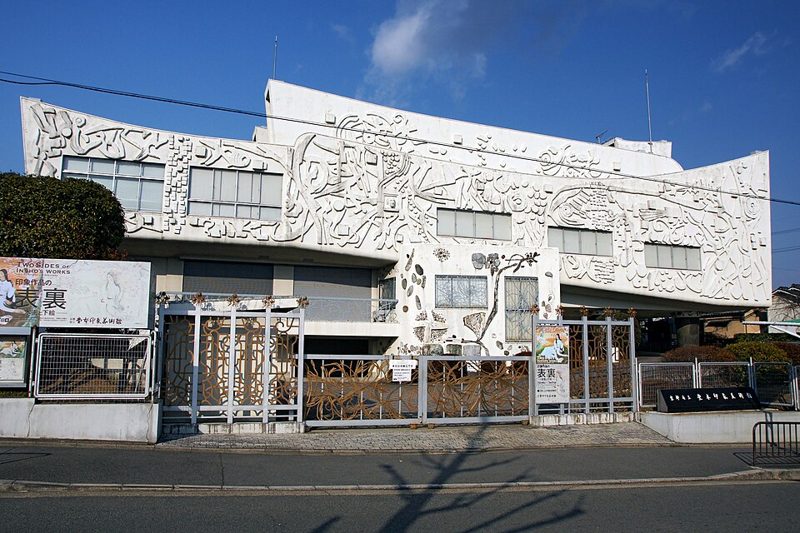
60th Anniversary Special Exhibition II: The Muses Who Modeled for Insho Domoto
Insho Domoto Museum of Fine Arts (Kitano-Hakubaicho Sta.)
Oct 15 (Thu) – Dec 20 (Sun) 09:30 – 17:00
A special exhibition celebrating the museum's 60th anniversary, exploring depictions of women that artist Insho Domoto pursued throughout his career.
Details →Festival & seasonal event
Daioin (Myoshinji) Autumn Special Viewing 2026 with Tatsuya Kinoshita Tanka Exhibition
Daioin, a sub-temple of Myoshinji (Hanazono Sta.)
Nov 7 (Sat) – Nov 29 (Sun) 10:00 – 16:00 (details on the official site)
An autumn special viewing at Daioin, inside the Myoshinji temple complex. See the sliding-door paintings by Shibata Zeshin in the main hall, the 'Senbon no Hana no Maru' sliding doors and the garden, alongside an exhibition of tanka poems by poet Tatsuya Kinoshita. General admission needs no reservation; the exhibition events (Nov 7, 8, 9, 27, 29), a Chinese tea gathering (Nov 27-28), a baobab concert (Nov 28, 18:30) and brush-written temple seals require booking. Closes at 14:00 on Nov 8.
Details →
Tips from visitors
Been here? Leave a short tip for the next traveler — in any language. No name, no sign-up.
Thank you! We check every tip by hand and post it within a day or two.
How we post tips: we read every one before it goes up. We remove swear words, insults, ads, links and anything that could identify a person. Tips are shown in the language they were written in, with a translate link. Kyochika never writes or pays for tips, and there are no star ratings.
FAQ
- What is Ryoan-ji Temple?
- Fifteen rocks rest on a field of white gravel. What they represent remains an open question. Neither the creator nor the precise date of Ryoan-ji's famous rock garden is firmly established. This uncertainty is part of its fascination: visitors from around the world sit before the stones, looking for meanings of their own.
- Hours at Ryoan-ji Temple?
- March–November: 8:00–17:00. December–February: 8:30–16:30.
- Closed at Ryoan-ji Temple?
- Open daily.
- Admission at Ryoan-ji Temple?
- Adults ¥600; high school students ¥500; elementary and junior high school students ¥300.
- Access at Ryoan-ji Temple?
- Approximately 8 minutes on foot from Randen Ryoanji. Approximately 1 minute on foot from the Ryoanji-mae city bus or JR bus stop.