Sights & streets in Kyoto · Pontocho, Nakagyo Ward, Central Kyoto
Pontocho Alley
Staying nearby? Where to stay in Kawaramachi & Shijo for getting around →
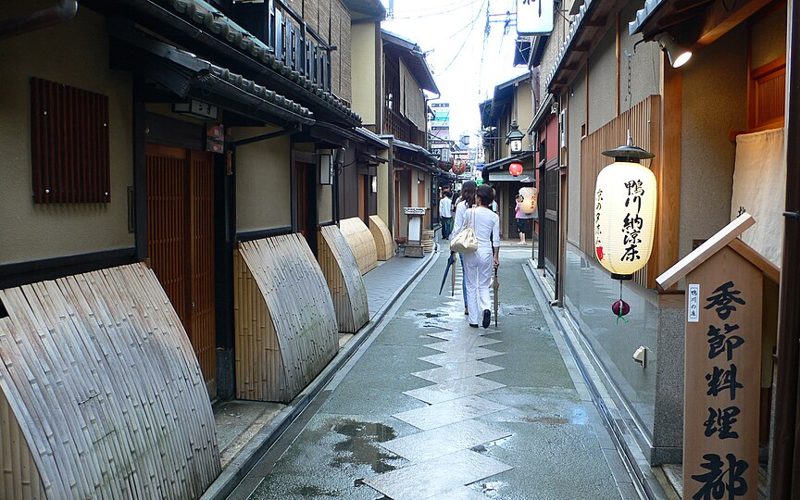
Pontocho stretches for just over 500 meters along the western side of the Kamo River, yet its history reaches from riverside hospitality in approximately 1712 to the official recognition of geisha entertainment in 1859. The street became one of Kyoto's celebrated hanamachi, where professional performers developed traditional arts in a network of teahouses. Its red-brown lattice facades and narrow side passages preserve architectural traces of that history.
Kyochika's take
K
y
o
c
h
i
k
a
r
e
c
o
m
m
e
n
d
s
P
o
n
t
o
c
h
o
f
o
r
t
r
a
v
e
l
e
r
s
i
n
t
e
r
e
s
t
e
d
i
n
K
y
o
t
o
'
s
t
r
a
d
i
t
i
o
n
a
l
e
n
t
e
r
t
a
i
n
m
e
n
t
c
u
l
t
u
r
e
,
h
i
s
t
o
r
i
c
s
t
r
e
e
t
s
a
n
d
r
e
s
t
a
u
r
a
n
t
s
r
a
t
h
e
r
t
h
a
n
t
h
o
s
e
e
x
p
e
c
t
i
n
g
a
t
i
c
k
e
t
e
d
s
i
g
h
t
s
e
e
i
n
g
a
t
t
r
a
c
t
i
o
n
.
C
o
n
s
i
d
e
r
a
l
a
t
e
-
a
f
t
e
r
n
o
o
n
w
a
l
k
t
o
e
x
a
m
i
n
e
t
h
e
a
r
c
h
i
t
e
c
t
u
r
e
,
f
o
l
l
o
w
e
d
b
y
d
i
n
n
e
r
i
n
a
n
e
s
t
a
b
l
i
s
h
m
e
n
t
s
e
l
e
c
t
e
d
f
r
o
m
t
h
e
n
e
i
g
h
b
o
r
h
o
o
d
a
s
s
o
c
i
a
t
i
o
n
'
s
d
i
r
e
c
t
o
r
y
.
D
u
r
i
n
g
t
h
e
o
f
f
i
c
i
a
l
r
i
v
e
r
s
i
d
e
d
i
n
i
n
g
s
e
a
s
o
n
,
a
r
e
s
t
a
u
r
a
n
t
o
v
e
r
l
o
o
k
i
n
g
t
h
e
K
a
m
o
R
i
v
e
r
p
r
o
v
i
d
e
s
a
n
o
t
h
e
r
p
e
r
s
p
e
c
t
i
v
e
o
n
t
h
e
d
i
s
t
r
i
c
t
'
s
r
e
l
a
t
i
o
n
s
h
i
p
w
i
t
h
t
h
e
w
a
t
e
r
.
Hours, admission and access
- Hours
- Pontocho is a public street and has no district-wide opening hours. Individual restaurants, bars, shops and performance venues operate according to their own schedules.
- Closed
- No district-wide regular closing day. Individual establishments have their own closing days.
- Admission
- Free to walk along the public street. Restaurants, bars and performances charge separately.
- Access
- Sanjo Station on the Keihan Railway: approximately 5 minutes on foot. Gion-Shijo Station on the Keihan Railway: approximately 3 minutes. Kawaramachi Station on the Hankyu Railway, now known as Kyoto-Kawaramachi: approximately 5 minutes. Kyoto Shiyakusho-mae Station: approximately 10 minutes. These are the walking times published by the Pontocho Noren-kai.
- Nearest station
- Sanjo Station (Keihan Railway)
Checked against official information on 2026-10-28. Details change, so check the official website before you go.
Sources: Pontocho Noren-kai Official Website, Pontocho Noren-kai Official History, Pontocho Noren-kai Official Access, Kyoto City Official Riverside Dining Guide, Kyoto City Official Autumn Dance Guide 2026
 Pochikichi's story corner
How did a riverside stopping place become one of Kyoto's traditional entertainment districts?
Pontocho developed along a narrow corridor beside the Kamo River, between the Sanjo and Shijo areas of central Kyoto. The Pontocho Noren-kai describes the street as extending a little over 500 meters. Its official historical account traces the beginnings of waterside teahouses to approximately 1712, when establishments served travelers and boatmen associated with the Takase River. These early businesses reflected the importance of river transportation and hospitality to Kyoto's urban economy.
The neighborhood gradually developed into a center of specialized entertainment. In 1859, official permission was granted for geisha entertainment, strengthening Pontocho's identity as a hanamachi alongside Gion. Its cultural traditions became associated with geiko and maiko, whose professional activities included dance and other performing arts. The traditional teahouses of a hanamachi are distinct from ordinary restaurants: their social customs and performance arrangements form part of the district's particular historical identity.
In 1872, Kyoto held its first exposition after the imperial capital had moved to Tokyo. According to the neighborhood association, an associated entertainment program introduced Kamogawa Odori as a way of encouraging visitors and supporting Kyoto's continued prosperity. Dance performances gave the district's performing artists an opportunity to present their skills to public audiences. What began in that context developed into a lasting element of Pontocho's cultural identity.
The street's surviving architectural character reflects this development. The Noren-kai describes buildings with bengara-colored latticework and numerous small east–west passages branching from the main north–south lane. Pontocho Kaburenjo Theater remains associated with the district's formal dance performances. So when you visit, look for the contrast between the narrow street, its closely spaced entrances and the river landscape immediately beyond the buildings.
Sources: Pontocho Noren-kai Official History, Pontocho Noren-kai Official Website
Long ago, around hereWhat was this riverside corridor before Pontocho became an entertainment district?
The exact buildings occupying the present Pontocho lane approximately 1,200 years ago cannot be established from the opened sources. The documented history provided by the neighborhood association begins much later, with the emergence of waterside teahouses around 1712. Rather than attributing an undocumented Heian-period building to the location, it is more accurate to understand the district through its later role as a commercial corridor associated with the Kamo River and transportation on the Takase River.
Approximately 400 years ago, the area was approaching the period in which its documented hospitality history emerged. The association identifies boatmen, travelers, inns and teahouses as important elements of its early development. By approximately 150 years ago, Pontocho had become an established geisha entertainment district, and the first Kamogawa Odori had been performed in 1872. Its transformation from riverside hospitality to a recognized center of performing arts illustrates how Kyoto's commercial and cultural traditions developed together.
Sources: Pontocho Noren-kai Official History
Hidden highlights
- Bengara Lattice Facades
- The official neighborhood history identifies the red-brown latticework of buildings on both sides of the street as a characteristic feature. Examine the variations in their arrangement and the relationship between screens and entrances.
- The Side Passages
- Pontocho's official history describes numerous smaller lanes branching east and west. Observe how these narrow connections divide the urban blocks without entering private property.
- Pontocho Kaburenjo Theater
- This performance venue is closely associated with Kamogawa Odori and Suimei-kai. Its cultural importance comes from the professional dance traditions of the district.
- The River-Facing Restaurants
- Participating establishments offer seasonal dining overlooking the Kamo River. The terraces reveal how the district's historic connection to the waterfront continues through contemporary hospitality.
- The Sanjo-to-Shijo Streetscape
- Walking the length of Pontocho reveals the continuity of its narrow street and tightly arranged buildings. Compare the lane with the broader streets at its entrances.
- The Variety of Restaurants
- The official association directory includes Japanese cuisine, Italian restaurants, sushi, soba and udon, yakitori, bars and other establishments. The range reflects Pontocho's role as an active dining neighborhood.
Sources: Pontocho Noren-kai Official History, Pontocho Noren-kai Official Directory, Kyoto City Official Riverside Dining Guide
Where did the name Pontocho come from?
The Pontocho Noren-kai records competing explanations for the district's unusual name. One theory connects it with the sound of a drum, using wordplay involving the waterways on either side of the area. Another associates it with the Portuguese word 'pont.' The association presents these as theories rather than establishing a definitive linguistic origin.
The uncertainty itself makes the name worth discussing. Pontocho's pronunciation is familiar to Kyoto residents, but the historical explanation has not been settled by the sources examined here. Kyochika recommends presenting the competing accounts as local traditions rather than treating either as proven etymology.
Sources: Pontocho Noren-kai Official History
The performance tradition that helped Kyoto attract visitors
Kamogawa Odori began in 1872 as an associated event of the first Kyoto Exposition. The neighborhood association explains that the production was created partly to attract visitors and promote Kyoto's prosperity after the capital moved to Tokyo. Performances by geiko and maiko helped demonstrate the city's continuing strength in traditional performing arts.
The performance tradition remains associated with Pontocho Kaburenjo Theater. Kyoto City's official 2026 autumn guide listed Suimei-kai from October 15 to October 20, with approximately 40 geiko and maiko taking part. The guide explains that the event's name refers to the clear waters of the Kamo River beside the theater. For travelers, attending a scheduled public performance is a more appropriate way to experience these professional arts than attempting to interrupt performers on the street.
Sources: Pontocho Noren-kai Official History, Kyoto City Official Autumn Dance Guide 2026
How to walk it
- Sanjo Station — Begin near the northern part of the district and orient yourself toward the Kamo River. (5 min)
- Northern Pontocho — Enter the narrow lane and observe the contrast between its intimate scale and the surrounding streets. (5 min)
- Pontocho Kaburenjo — Look at the exterior of the performance venue associated with the district's dance traditions. (5 min)
- Traditional Lattice Facades — Continue south, observing bengara-colored latticework and the arrangement of wooden entrances. (10 min)
- Side Passages and Restaurant Frontages — Notice the branching lanes and the different kinds of dining establishments. Remain within public areas. (5 min)
- Southern Pontocho — Finish the main street near Shijo and compare its scale with the surrounding commercial district. (5 min)
- Kamo River — View the river-facing side of the neighborhood and, during the appropriate season, its riverside dining terraces. (10 min)
The route is a Kyochika suggestion using publicly accessible streets. All individual stop durations are estimates, not official published walking times. The suggested exploration totals approximately 45 minutes, excluding restaurants and performances. The association confirms that the main Pontocho street extends a little over 500 meters.
Sources: Pontocho Noren-kai Official History, Pontocho Noren-kai Official Access
Through the seasons
- Spring
- Kamogawa Odori is historically associated with the district's spring performance tradition. Check the current program with the organizer rather than relying on an older published schedule.
- May 1–October 15, 2026
- Kyoto City's official 2026 riverside dining guide lists this period for Kamogawa Noryo Yuka. Participating restaurants offer seasonal dining spaces facing the Kamo River.
- June–August
- Kyochika recommends considering a riverside terrace restaurant during the warmer months. The Kyoto City guide identifies the Kamo River dining experience as a distinctive seasonal tradition.
- October 15–20, 2026
- Kyoto City's official autumn dance guide listed Suimei-kai at Pontocho Kaburenjo Theater, with performances beginning at 3:30 PM and published admission prices ranging from ¥5,000 to ¥10,000.
- November–February
- Pontocho remains a dining and entertainment district outside the seasonal riverside terrace period. Check the operating hours of individual establishments.
Getting there by taxi or bus
- Taxi
- Kyochika suggests using an accessible entrance near Sanjo or Shijo rather than expecting a taxi to travel along the narrow alley. No taxi fare or official drop-off point was confirmed.
- Bus
- Kyoto City Bus Route 205 to Kawaramachi Sanjo (河原町三条), listed by the Pontocho Noren-kai in its access information for the district's performance venue.
- Other
- Keihan Sanjo Station: approximately 5 minutes on foot. Keihan Gion-Shijo Station: approximately 3 minutes. Hankyu Kyoto-Kawaramachi Station: approximately 5 minutes. Kyoto Shiyakusho-mae Station: approximately 10 minutes. Walking times are from the official Pontocho Noren-kai access guide.
Sources: Pontocho Noren-kai Official Access, Pontocho Noren-kai Official History
Pair it with
- Kamo River — Explore the river landscape that shaped the district's hospitality history and seasonal dining culture. (3 min walk)
- Gion District — Compare Pontocho with another of Kyoto's traditional entertainment districts. (10 min walk)
- Shijo Area — Continue into central Kyoto's commercial streets after exploring Pontocho. (5 min walk)
Good to know before you go
- Pontocho is a public street rather than a ticketed attraction.
- The street can be explored without paying admission.
- Individual restaurants and bars establish their own operating hours and prices.
- The Pontocho Noren-kai maintains an official restaurant and shop directory.
- Traditional geiko and maiko performances are associated with the district, but public performance schedules must be checked separately.
- The neighborhood association identifies bengara-colored latticework and narrow side passages as features of the streetscape.
- The 2026 official Kyoto tourism guide confirms seasonal Kamo River terrace dining from May 1 through October 15.
- Kyochika recommends respecting the privacy of people entering traditional teahouses and avoiding obstruction of the narrow lane.
- Do not assume private teahouses provide unrestricted walk-in access.
- Payment methods, English menus and reservations depend on individual establishments; no common district-wide policy was confirmed.
Next stop: book for later today PR
Experiences near here you can book on Klook.
Yuzen DyeingYuzen dyeing in a historic machiya→Kintsugi WorkshopKintsugi repair experience→Ad: Klook affiliate links.
🍜 Where to eat after
Restaurants near here on Google Maps→Many restaurants in Kyoto take reservations, and some are cash only. Check the restaurant page before you go.
Events nearby
Nov 1 (Sun) – Nov 23 (Mon) 09:00 – 18:00 (details on the official site)
A City of Kyoto trial linking Pontocho Park to the Kamo River with a temporary staircase, plus chairs and a lawn corner. On Nov 13 and 14 only, food stalls serve craft beer, sake, kamameshi rice, shumai and takoyaki from 11 a.m. to 9 p.m. Rain date: Nov 15.
Details →Art exhibition
Architecture Shaped by Time: TIME'S and Tadao Ando (Kyoto Architecture Center)
Kyoto Architecture Center (inside TIME'S) (Sanjo Sta.)
Sep 2 (Wed) – Nov 23 (Mon) 10:00 – 18:00 (details on the official site)
The first exhibition of the Kyoto Architecture Center, opened in September 2026 inside TIME'S, the 1984 Tadao Ando building on the Takase River. Photos from before and after construction, period magazines, drawings and models trace his design thinking.
Details →Live music
Kichirei Kaomise Kogyo (December Grand Kabuki), Minamiza
Minamiza Theatre (Gion-Shijo Sta.)
Dec 1 (Tue) – Dec 24 (Thu) 10:30 – 21:10
Kyoto's year-end kabuki tradition. Matinee from 10:30 AM (ends around 3:15 PM), evening show from 4:00 PM (ends around 9:10 PM). The matinees on Dec 12, 19 and 20 and the evening show on Dec 18 are private bookings.
Details →Art exhibition
Martine Franck: A Gaze on Her Time (Kahitsukan Kyoto Museum of Contemporary Art)
Kahitsukan Kyoto Museum of Contemporary Art (Gion-Shijo Sta.)
Oct 3 (Sat) – Jan 17 (Sun) 10:00 – 18:00 (details on the official site)
Sixty signed original prints by Magnum photographer Martine Franck (1938–2012) from the Kahitsukan collection, including candid portraits of her husband, Henri Cartier-Bresson.
Details →Art exhibition
Eternal Spirits: Go Nagai - Go Nagai Wonderland Revival (Kyoto) at The Museum of Kyoto
The Museum of Kyoto, 3rd-floor gallery (Karasuma Oike Sta.)
Nov 28 (Sat) – Jan 11 (Mon) 10:00 – 18:00 (details on the official site)
An exhibition on Go Nagai, creator of Mazinger Z, Devilman and Cutie Honey. Its core is the original art and figures recovered from the burned Go Nagai Wonderland museum in Wajima after the 2024 Noto Peninsula earthquake. Highlights include the quake-damaged large Great Mazinger figure, the restored Mazinger Z original art, the unrestored Demon Lord Dante art, a display on the Wajima Taisai (Kiriko) festival, and new manga Nagai drew for the show. Advance tickets on sale until Nov 27.
Details →Art exhibition
Kyoto Special Opening of Cultural Properties: Kushoin, a sub-temple of Kenninji
Kushoin (Kenninji sub-temple) (Gion-Shijo Sta.)
Nov 13 (Fri) – Nov 30 (Mon) Last entry 16:00
This Kenninji sub-temple opens for the autumn special openings: the abbot's hall and its garden, a statue of founder Sanko Shoeki, the study hall Koshoken, the tea room Enshu Betsugonoseki, and a painting of the Battle of Nagashino by Ukita Ikkei. About 8 minutes on foot from Gion-Shijo Station on the Keihan line.
Details →
Tips from visitors
Been here? Leave a short tip for the next traveler — in any language. No name, no sign-up.
Thank you! We check every tip by hand and post it within a day or two.
How we post tips: we read every one before it goes up. We remove swear words, insults, ads, links and anything that could identify a person. Tips are shown in the language they were written in, with a translate link. Kyochika never writes or pays for tips, and there are no star ratings.
FAQ
- What is Pontocho Alley?
- Pontocho stretches for just over 500 meters along the western side of the Kamo River, yet its history reaches from riverside hospitality in approximately 1712 to the official recognition of geisha entertainment in 1859. The street became one of Kyoto's celebrated hanamachi, where professional performers developed traditional arts in a network of teahouses. Its red-brown lattice facades and narrow side passages preserve architectural traces of that history.
- Hours at Pontocho Alley?
- Pontocho is a public street and has no district-wide opening hours. Individual restaurants, bars, shops and performance venues operate according to their own schedules.
- Closed at Pontocho Alley?
- No district-wide regular closing day. Individual establishments have their own closing days.
- Admission at Pontocho Alley?
- Free to walk along the public street. Restaurants, bars and performances charge separately.
- Access at Pontocho Alley?
- Sanjo Station on the Keihan Railway: approximately 5 minutes on foot. Gion-Shijo Station on the Keihan Railway: approximately 3 minutes. Kawaramachi Station on the Hankyu Railway, now known as Kyoto-Kawaramachi: approximately 5 minutes. Kyoto Shiyakusho-mae Station: approximately 10 minutes. These are the walking times published by the Pontocho Noren-kai.
- Is Pontocho free?
- Yes. Walking along the public street is free. Dining and entertainment establishments charge separately.
- What time should I visit?
- The public street has no single opening schedule. Kyochika suggests late afternoon for exploring its architectural details and evening for visiting a restaurant.
- Can tourists watch geiko and maiko performances?
- Yes, through scheduled public performances. Kyoto City's official guide identifies Suimei-kai as a Pontocho performance event. Check the current program and ticket availability.
- When can I eat beside the Kamo River?
- Kyoto City's official 2026 guide lists the Kamogawa Noryo Yuka dining season as May 1–October 15. Availability depends on the participating restaurant.