Temples in Kyoto · Rakuhoku
Rokuon-ji Temple (Kinkaku-ji, the Golden Pavilion)
Staying nearby? Where to stay in Karasuma Oike for getting around →
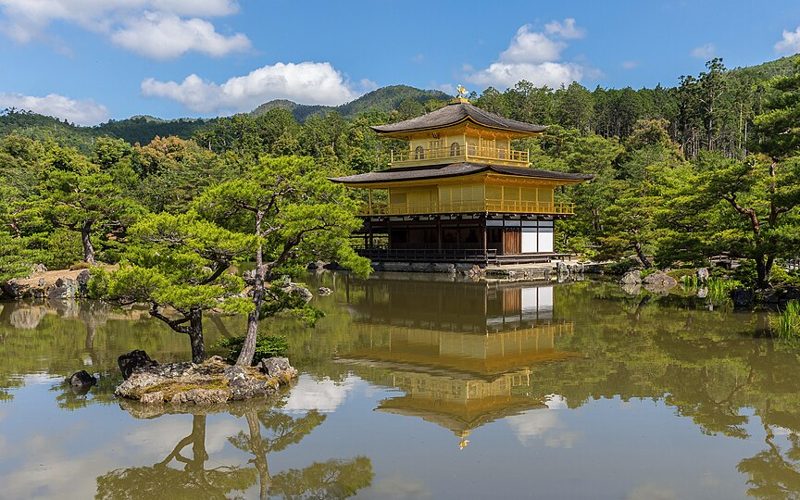
The Golden Pavilion was originally part of a shogun's private estate, serving as a stage for politics and diplomacy. Ashikaga Yoshimitsu began developing his Kitayama residence in 1397, later receiving an emperor and envoys from Ming China. The golden building reflected in the pond today is a reconstruction completed in 1955, after the original was destroyed by fire in 1950.
🎧 English audio guide (first track free): Kinkaku-ji: The Golden Pavilion and Its Hidden Stories →Kyochika's take
Start by viewing the Golden Pavilion across Kyokochi Pond, then follow the designated route and look for the Bell Tower and Kuri. Allow 45–60 minutes. Kinkaku-ji combines well with nearby Ryoan-ji and Ninna-ji for a journey through three World Heritage temples in northwestern Kyoto.
Hours, admission and access
- Hours
- 9:00–17:00.
- Closed
- Open daily.
- Admission
- Adults (high school age and older) ¥500; elementary and junior high school students ¥300.
- Access
- Take a Kyoto City Bus to Kinkakuji-michi.
- Nearest station
- Kitano-hakubaicho
Checked against official information on 2026-10-28. Details change, so check the official website before you go.
Sources: Kinkaku-ji Official Website: Access and Visiting Information (Japanese), Kinkaku-ji Official Website: Frequently Asked Questions (Japanese), Rokuon-ji: Geographic Location Data (Japanese)
 Pochikichi's story corner
How Did a Shogun's Private Villa Become a Buddhist Temple?
Ashikaga Yoshimitsu, the third shogun of the Muromachi government, acquired a Kitayama estate that had previously belonged to Saionji Kintsune, a nobleman of the Kamakura period. In 1397, he began transforming it into an extraordinary residence known as Kitayama-dono. Its most celebrated building was the Shariden, or Reliquary Hall, now called the Golden Pavilion. The first floor enshrined a Buddhist triad centered on Shakyamuni, the second an image of Kannon, and the third sacred relics of the Buddha. The architecture and surrounding landscape were intended to express Buddhist ideals.
Kitayama-dono was much more than a peaceful retirement retreat. Yoshimitsu transferred important ceremonial functions from his former residence to this estate and received envoys from Ming China here. In 1408, Emperor Go-Komatsu visited for an elaborate reception. Yoshimitsu spent his final years at Kitayama. After his death, the estate became a Zen temple in accordance with his wishes. It was named Rokuon-ji after his posthumous Buddhist title, Rokuon-in. The popular name Kinkaku-ji comes from the Golden Pavilion itself.
Much of the temple complex was destroyed during the Onin War, although the Golden Pavilion survived. In 1950, however, an act of arson completely destroyed the building. It was reconstructed in 1955 using records from an earlier restoration, and the gold leaf was renewed in 1987. The pavilion visitors see today is therefore not an untouched medieval building. Nevertheless, its architectural arrangement and relationship with the pond preserve Yoshimitsu's original vision. So, rather than looking only at the golden walls, take time to see the pavilion reflected in Kyokochi Pond and the garden surrounding it.
Sources: Kinkaku-ji Official Website: About the Temple (Japanese), Shokoku-ji Official Website: Historical Chronology (Japanese)
Long ago, around hereWhat Was This Area Like Before the Golden Pavilion?
Kitayama already had a long religious history before Yoshimitsu established his estate. During the Heian period, temples such as Reigan-ji, Koryu-ji, and Hoon-ji stood in the area, alongside imperial tombs and burial mounds. In the Kamakura period, the court noble Saionji Kintsune acquired the land and built a family temple and private villa. A dedication ceremony for the Saionji temple was held in 1224. When the poet Fujiwara no Teika visited the following year, he reportedly marveled at the waterfalls and ponds.
After the fall of the Kamakura shogunate, the Saionji family's influence declined, and its Kitayama estate fell into disrepair. Yoshimitsu transformed the abandoned property into Kitayama-dono, a residence that projected both the political authority and cultural sophistication of the shogunate. The temple buildings were reorganized during the Edo period, and ordinary visitors were first admitted in 1894. The pond still carries traces of the estate that existed before Yoshimitsu's time. That is why Kyokochi Pond, stretching out in front of the Golden Pavilion, deserves as much attention as the building itself.
Sources: Kinkaku-ji Official Website: About the Temple (Japanese)
Lesser-Known Highlights
- Bell Tower
- The bell is traditionally associated with the Saionji family of the Kamakura period. Known for its characteristic pitch, it is linked to the musical note A, a standard reference pitch.
- Kuri, the Temple Kitchen
- Thought to date from around 1492–1504, this building preserves the character of a medieval Zen temple, a quieter architectural treasure often overlooked beside the Golden Pavilion.
- Ichigashi Oak
- A large Japanese evergreen oak within the grounds. It may have been planted during the early Edo-period restoration, or it may already have been mature at that time.
- The Pavilion's Three Floors
- The first floor houses a Shakyamuni Buddha triad, the second Kannon, and the third sacred Buddhist relics. These religious functions reveal a meaning beyond the building's golden appearance.
Sources: Kinkaku-ji Official Website: Precinct Guide (Japanese), Kinkaku-ji Official Website: History (Japanese)
Good to know before you go
- Admission can be paid in cash or through the Omairi Pay cashless payment system. Charms and goshuin, calligraphic temple stamps, are excluded from cashless payment.
- There are no group discounts based on the number of visitors. Groups of 30 or more are subject to the temple's group-entry arrangements.
- Admission reductions for visitors with disability certificates are available upon presentation of the original certificate on the day or through advance application by return postcard.
- The official website offers a 360-degree virtual tour and a live camera.
Next stop: book for later today PR
Experiences near here you can book on Klook.
Tea CeremonyTea ceremony and matcha making (TIA Arashiyama)→Rickshaw TourArashiyama rickshaw tour→Ad: Klook affiliate links.
🍜 Where to eat after
Restaurants near here on Google Maps→Many restaurants in Kyoto take reservations, and some are cash only. Check the restaurant page before you go.
Events nearby
Art exhibition
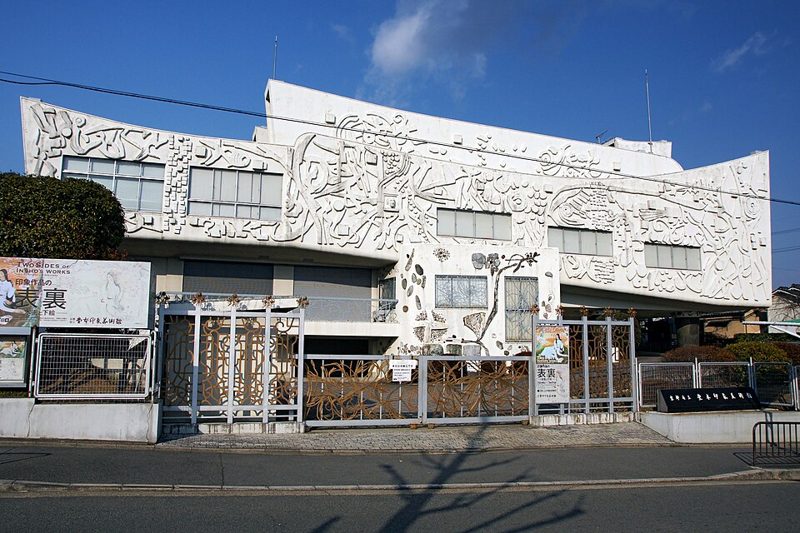
60th Anniversary Special Exhibition II: The Muses Who Modeled for Insho Domoto
Insho Domoto Museum of Fine Arts (Kitano-Hakubaicho Sta.)
Oct 15 (Thu) – Dec 20 (Sun) 09:30 – 17:00
A special exhibition celebrating the museum's 60th anniversary, exploring depictions of women that artist Insho Domoto pursued throughout his career.
Details →Market
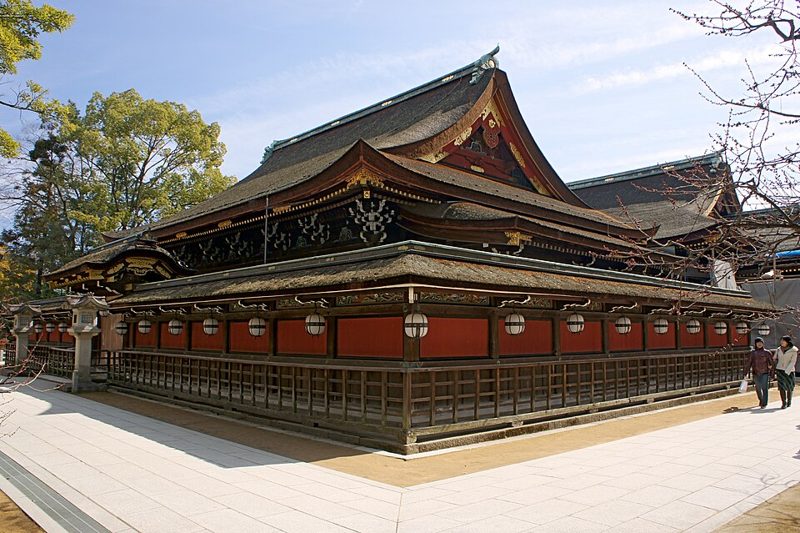
Tenjin-ichi Market (November 25) at Kitano Tenmangu Shrine
Kitano Tenmangu Shrine (Kitano-Hakubaicho Sta.)
Nov 25 (Wed) Hours: please check with the organizer (stalls open all day; grounds lit up from sunset)
The 25th of every month is the shrine's fair day, known as Tenjin-san no Hi, with stalls lining the approach all day and the grounds lit up from sunset. The last one of the year, on December 25, is called Shimai Tenjin.
Details →Market
Shimai Tenjin: Year-End Tenjin Market at Kitano Tenmangu
Kitano Tenmangu Shrine (Kitano-Hakubaicho Sta.)
Dec 25 (Fri) From 7:00 AM (closing time: please check with the organizer)
The market held on the 25th of every month closes the year on December 25. Known as Shimai Tenjin, it fills the shrine grounds with stalls of antiques, old tools and vintage clothing.
Details →Festival & seasonal event
Maple Garden at the Historic Odoi Earthworks: Autumn Illumination at Kitano Tenmangu Shrine
Kitano Tenmangu Shrine, Odoi Maple Garden (Kitano-Hakubaicho Sta.)
Nov 13 (Fri) – Dec 6 (Sun) Sunset–8:00 PM (last admission 7:40 PM)
Around 350 maple trees color the historic Odoi earthworks built by Toyotomi Hideyoshi. Illumination runs from sunset until 8:00 PM, with last admission at 7:40 PM. Admission includes a sweet inspired by the historic Kitano Grand Tea Gathering.
Details →Festival & seasonal event
Kencha-sai Tea Offering Ceremony, Kitano Tenmangu
Kitano Tenmangu Shrine (Kitano-Hakubaicho Sta.)
Dec 1 (Tue) Ritual from 10:00 (about 1 hour); tea rooms 9:00 – 15:00
A tea offering held in memory of the Great Kitano Tea Gathering of 1587, served in 2026 by the Urasenke school. Tea rooms are set up in the shrine grounds and in Kamishichiken. The ritual starts at 10:00 AM (about an hour); tea rooms 9:00 AM to 3:00 PM.
Details →Festival & seasonal event
Kamigyo Culture Scroll No. 13: Lecture and Cultural Property Tour at Kitano Tenmangu
Kitano Tenmangu Shrine (Bundo Kaikan and main sanctuary grounds) (Kitano-Hakubaicho Sta.)
Dec 19 (Sat) 13:30 – 15:30 (details on the official site)
A lecture by a Kitano Tenmangu priest on the shrine's history and its Han-Mando Festival, followed by a formal visit to the National Treasure main sanctuary and guided group tours. First 100 applicants; applications run Nov 20 to Dec 18. Preschool children cannot apply.
Details →
Tips from visitors
Been here? Leave a short tip for the next traveler — in any language. No name, no sign-up.
Thank you! We check every tip by hand and post it within a day or two.
How we post tips: we read every one before it goes up. We remove swear words, insults, ads, links and anything that could identify a person. Tips are shown in the language they were written in, with a translate link. Kyochika never writes or pays for tips, and there are no star ratings.
FAQ
- What is Rokuon-ji Temple (Kinkaku-ji, the Golden Pavilion)?
- The Golden Pavilion was originally part of a shogun's private estate, serving as a stage for politics and diplomacy. Ashikaga Yoshimitsu began developing his Kitayama residence in 1397, later receiving an emperor and envoys from Ming China. The golden building reflected in the pond today is a reconstruction completed in 1955, after the original was destroyed by fire in 1950.
- Hours at Rokuon-ji Temple (Kinkaku-ji, the Golden Pavilion)?
- 9:00–17:00.
- Closed at Rokuon-ji Temple (Kinkaku-ji, the Golden Pavilion)?
- Open daily.
- Admission at Rokuon-ji Temple (Kinkaku-ji, the Golden Pavilion)?
- Adults (high school age and older) ¥500; elementary and junior high school students ¥300.
- Access at Rokuon-ji Temple (Kinkaku-ji, the Golden Pavilion)?
- Take a Kyoto City Bus to Kinkakuji-michi.