Sights & streets in Kyoto · Higashiyama / Gion
Gion and Hanamikoji Street
Staying nearby? Where to stay in Gion & Higashiyama for getting around →
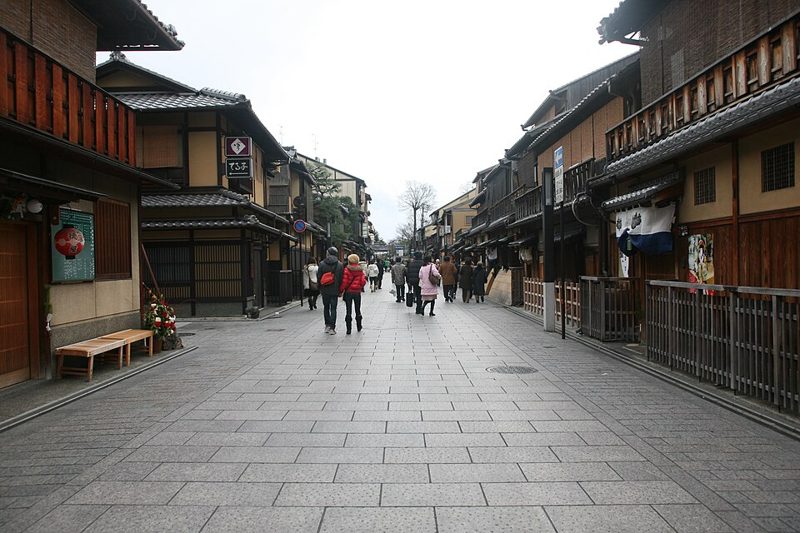
Hanamikoji did not begin as a street of geiko and maiko. Gion grew from the approach to Yasaka Shrine, where teahouses serving visitors gradually developed into a sophisticated entertainment district. During the Meiji period, land associated with Kennin-ji Temple was reorganized, helping create the streetscape of southern Gion seen today. Its stone-paved lanes and wooden teahouse facades belong not to an open-air museum but to a working community where traditional performers still live and train.
Kyochika's take
From Gion-shijo, walk east along Shijo-dori, turn south into Hanamikoji, and continue toward Kennin-ji. This route makes the historical relationship between the temple and entertainment district easier to appreciate. Add Shirakawa and Tatsumi Bridge for a pleasant walk of approximately 1–1.5 hours.
Hours, admission and access
- Access
- Walk from Keihan Gion-shijo toward Hanamikoji Street. Heading south from Shijo-dori brings you into the traditional streets of Gion Kobu.
- Nearest station
- Gion-shijo
Checked against official information on 2026-10-28. Details change, so check the official website before you go.
Sources: Kyoto City Official Tourism Guide: Gion and Kiyomizu Area (Japanese), Kyoto City Official Tourism Guide: Visitor Etiquette Notice (Japanese), Kyoto City Official Tourism Guide: Kyoto Visitor Etiquette (Japanese)
 Pochikichi's story corner
When Did Hanamikoji Become the Street We Know Today?
Gion originally developed as a neighborhood serving visitors to Gion Shrine, now known as Yasaka Shrine. Rest stops and teahouses emerged along the approach, eventually giving rise to a district where professional entertainers performed music and dance. Kyoto now has five traditional entertainment districts, known as kagai: Gion Kobu, Gion Higashi, Pontocho, Miyagawacho, and Kamishichiken. Gion Kobu is one of these distinct communities, each with its own traditions and performing culture.
Kennin-ji Temple played an important role in the development of the neighborhood around Hanamikoji. According to Kyoto City's historic landscape preservation plans, southern Gion formed around the temple precincts. During the Meiji period, land formerly occupied by Kennin-ji's subsidiary temples was reorganized as part of efforts to revitalize Kyoto after the destruction and upheaval of the late shogunate. This process helped create the present streets of Gion Kobu. Despite their timeless appearance, these lanes also tell a story of urban transformation in modern Japan.
A working kagai depends on much more than the performers visitors occasionally glimpse on the streets. There are teahouses where geiko, Kyoto's traditional professional entertainers, and maiko, their apprentices, perform. There are places where they live and practice, as well as artisans who make their kimono and hair ornaments and specialists who style their hair. The entire neighborhood supports a living cultural profession. So, when walking along Hanamikoji, look beyond the hope of spotting a performer and pay attention to the wooden latticework and traditional teahouse architecture lining the street.
Sources: Kyoto City Official Website: Gion Kobu South Historic Landscape Preservation Plan (Japanese), Kyoto City Official Website: Traditional Entertainment District Culture (Japanese), Kyoto City Official Tourism Guide: Gion and Kiyomizu Area (Japanese)
Long ago, around hereWhat Was Gion Like Before It Became a Geiko District?
Gion began as a neighborhood serving worshippers visiting Yasaka Shrine. Teahouses and resting places appeared to accommodate pilgrims, and the surrounding streets gradually developed a culture of food, hospitality, and performing arts. To the south lay the grounds of Kennin-ji, a Zen temple founded during the Kamakura period. The town grew around these religious precincts. In the late 16th century, Toyotomi Hideyoshi's construction projects at Hoko-ji and Fushimi Castle increased traffic along Yamato-oji, contributing to the area's development.
During the Meiji period, land belonging to Kennin-ji's subsidiary temples was reorganized, helping form the present streets of southern Gion. Kyoto City now designates the neighborhood as a historic landscape preservation area and works to maintain its traditional appearance. Yet Gion is not simply a preserved collection of old buildings. It is a place where geiko, maiko, residents, and business owners continue their everyday lives. So, as you walk from Kennin-ji toward Shijo-dori, watch how the streetscape gradually changes from a temple neighborhood into the heart of a working entertainment district.
Sources: Kyoto City Official Website: Gion Kobu South Historic Landscape Preservation Plan (Japanese), Kyoto Travel Plus: Kyoto Visitor Etiquette (Japanese)
Lesser-Known Highlights
- The Connection to Kennin-ji
- Southern Gion developed around the precincts of Kennin-ji. During the Meiji period, land belonging to subsidiary temples was reorganized into urban blocks, shaping today's streets.
- Shirakawa and Tatsumi Bridge
- North of Shijo-dori, this waterside neighborhood features willow trees and stone-paved lanes. It reveals another, quieter face of Gion beyond southern Hanamikoji.
- Teahouse Latticework
- Fine wooden lattice screens are a defining feature of traditional teahouse facades. Admire their craftsmanship while remembering that these buildings remain working premises, not public attractions.
- Kyoto's Five Kagai
- Gion Kobu and Gion Higashi are separate entertainment districts. Together with Pontocho, Miyagawacho, and Kamishichiken, they maintain distinct traditions of performance and hospitality.
Sources: Kyoto City Official Tourism Guide: Gion and Kiyomizu Area (Japanese), Kyoto City Official Website: Traditional Entertainment District Culture (Japanese), Kyoto City Official Website: Gion Kobu South Historic Landscape Preservation Plan (Japanese)
Through the seasons
- Spring
- Cherry blossoms and willow trees create a picturesque scene around Gion Shirakawa.
- Summer
- The Gion Festival takes place in July, centered on Yasaka Shrine.
- Autumn
- Explore the streets of Gion alongside nearby temples such as Kennin-ji.
Good to know before you go
- Do not follow or photograph geiko and maiko without permission. Kyoto City reiterated its visitor etiquette guidance in October 2026.
- Some lanes and properties around Hanamikoji are private. Unauthorized entry and photography are prohibited where indicated. Follow all posted signs.
- Do not touch teahouse lanterns or barriers, and avoid blocking building entrances.
- Geiko and maiko may be traveling to work. Stopping them to request photographs can disrupt their professional duties.
Next stop: book for later today PR
Experiences near here you can book on Klook.
Gion Walking TourGion and Yasaka Pagoda small-group walking tour→Ramen CookingRamen noodle making→Ad: Klook affiliate links.
🍜 Where to eat after
Restaurants near here on Google Maps→Many restaurants in Kyoto take reservations, and some are cash only. Check the restaurant page before you go.
Events nearby
Art exhibition
Entokuin Temple: Teikan-zu Folding Screens and Autumn Night Light-Up
Entokuin Temple (Kodaiji sub-temple) (Gion-Shijo Sta.)
Oct 23 (Fri) – Dec 13 (Sun) 10:00 – 22:00
The sub-temple of Kodaiji where Nene, the wife of Toyotomi Hideyoshi, spent her final years. It shows the Teikan-zu folding screens handed down in the Toyotomi family, and in autumn lights up its pond-stroll and dry landscape gardens at night. Lights come on at 17:00, last entry is 21:30 and the gate closes at 22:00, with no day/night changeover. Closed December 11 and 12 for temple services.
Details →Art exhibition
Martine Franck: A Gaze on Her Time (Kahitsukan Kyoto Museum of Contemporary Art)
Kahitsukan Kyoto Museum of Contemporary Art (Gion-Shijo Sta.)
Oct 3 (Sat) – Jan 17 (Sun) 10:00 – 18:00 (details on the official site)
Sixty signed original prints by Magnum photographer Martine Franck (1938–2012) from the Kahitsukan collection, including candid portraits of her husband, Henri Cartier-Bresson.
Details →Oct 23 (Fri) – Dec 13 (Sun) 17:00 – 22:00
See illuminated autumn gardens at Kodaiji, founded by Nene, the wife of Toyotomi Hideyoshi. Projection mapping also transforms the garden in front of the Hojo Hall. Last admission at 9:30 PM.
Details →Art exhibition
Kyoto Special Opening of Cultural Properties: Kushoin, a sub-temple of Kenninji
Kushoin (Kenninji sub-temple) (Gion-Shijo Sta.)
Nov 13 (Fri) – Nov 30 (Mon) Last entry 16:00
This Kenninji sub-temple opens for the autumn special openings: the abbot's hall and its garden, a statue of founder Sanko Shoeki, the study hall Koshoken, the tea room Enshu Betsugonoseki, and a painting of the Battle of Nagashino by Ukita Ikkei. About 8 minutes on foot from Gion-Shijo Station on the Keihan line.
Details →Live music
Kichirei Kaomise Kogyo (December Grand Kabuki), Minamiza
Minamiza Theatre (Gion-Shijo Sta.)
Dec 1 (Tue) – Dec 24 (Thu) 10:30 – 21:10
Kyoto's year-end kabuki tradition. Matinee from 10:30 AM (ends around 3:15 PM), evening show from 4:00 PM (ends around 9:10 PM). The matinees on Dec 12, 19 and 20 and the evening show on Dec 18 are private bookings.
Details →Art exhibition
Autumn 2026 Exhibition: Sakamoto Ryoma and the Satsuma-Choshu Alliance at Ryozen Museum of History
Ryozen Museum of History (Bakumatsu Ishin Museum) (Gion-Shijo Sta.)
Sep 16 (Wed) – Nov 23 (Mon) Last entry 17:00. Closed Mondays (open November 2 and 23)
An exhibition for the 190th anniversary of Sakamoto Ryoma's birth and the 160th anniversary of the Satsuma-Choshu Alliance. It introduces recent research that re-examines Ryoma's role using records from Satsuma, Choshu and the shogunate. The second period runs from October 27.
Details →
Tips from visitors
Been here? Leave a short tip for the next traveler — in any language. No name, no sign-up.
Thank you! We check every tip by hand and post it within a day or two.
How we post tips: we read every one before it goes up. We remove swear words, insults, ads, links and anything that could identify a person. Tips are shown in the language they were written in, with a translate link. Kyochika never writes or pays for tips, and there are no star ratings.
FAQ
- What is Gion and Hanamikoji Street?
- Hanamikoji did not begin as a street of geiko and maiko. Gion grew from the approach to Yasaka Shrine, where teahouses serving visitors gradually developed into a sophisticated entertainment district. During the Meiji period, land associated with Kennin-ji Temple was reorganized, helping create the streetscape of southern Gion seen today. Its stone-paved lanes and wooden teahouse facades belong not to an open-air museum but to a working community where traditional performers still live and train.
- Access at Gion and Hanamikoji Street?
- Walk from Keihan Gion-shijo toward Hanamikoji Street. Heading south from Shijo-dori brings you into the traditional streets of Gion Kobu.