Special Exhibition: Kan'ei — Beauty Nurtured by an Age of Peace at The Museum of Kyoto
- Dates
- Sep 19 (Sat) – Nov 15 (Sun)
- Hours
- 10:00 – 18:00
- Price
- Adults ¥1,800; university and high school students ¥1,200; elementary and junior high school students ¥600
- Where
- The Museum of Kyoto (Karasuma Oike)

The historic Kan'ei Imperial Visit to Nijo Castle in 1626
Good to know
Commemorating 400 years since the imperial visit of 1626 during the Kan'ei era, this exhibition explores Kyoto's culture in the early Edo period. Open until 7:30 PM on Fridays.
- Dates
- Sep 19 (Sat) – Nov 15 (Sun)
- Hours
- 10:00 – 18:00
- Venue
- The Museum of Kyoto
- Nearest station
- Karasuma Oike
- Admission
- Adults ¥1,800; university and high school students ¥1,200; elementary and junior high school students ¥600
About this event
In 1626, Emperor Go-Mizunoo was welcomed to Nijo Castle with five days of magnificent hospitality. Known as the Kan'ei Imperial Visit, the occasion was hosted by the retired shogun Tokugawa Hidetada and the reigning shogun Tokugawa Iemitsu. Eleven years after the destruction of the Toyotomi clan in the Summer Siege of Osaka, the visit also served as a political ceremony symbolizing reconciliation between the imperial court and the Tokugawa shogunate. This exhibition explores the historic visit and the flourishing cultural achievements of the early Edo period. Elaborate room decorations, fine cuisine, court dance, Noh theater, waka poetry, and instrumental music reveal the sophistication of the era. It was also a time of extraordinary artistic activity associated with figures such as Koetsu Hon'ami, Sotatsu Tawaraya, Ninsei Nonomura, and Senko Ikenobo.
Highlights
- The historic Kan'ei Imperial Visit to Nijo Castle in 1626
- The political ceremony involving Tokugawa Hidetada, Tokugawa Iemitsu, and Emperor Go-Mizunoo
- The artistic world of Koetsu Hon'ami, Sotatsu Tawaraya, and Ninsei Nonomura
- Imperial court culture, including bugaku dance, Noh theater, waka poetry, and instrumental music
- Good for
- For visitors interested in early Edo-period Kyoto, Rinpa art, Nijo Castle, and the history of the imperial court.
Good to know before you go
- The museum remains open until 7:30 PM on Fridays.
- Last admission is 30 minutes before the exhibition galleries close.
- Some exhibits and scrolls will be changed during the exhibition period.
- Preschool children accompanied by a parent or guardian enter free.
- A valid student ID is required for student admission rates.
Pochikichi's story cornerWhy Was the Emperor Invited to Nijo Castle in 1626?
From September 6 to 10, 1626, Emperor Go-Mizunoo visited Nijo Castle. His hosts were the retired shogun Tokugawa Hidetada and the reigning shogun Tokugawa Iemitsu. This historic occasion is known as the Kan'ei Imperial Visit.
Eleven years had passed since the destruction of the Toyotomi clan in the Summer Siege of Osaka, and the Tokugawa shogunate was consolidating its rule. The imperial visit was held as a political ceremony symbolizing reconciliation between the imperial court and the shogunate, as well as the arrival of a more peaceful era.
The five-day visit featured lavish room decorations, elaborate cuisine, bugaku court dance, Noh theater, waka poetry, and instrumental music. During this same period, artists and cultural figures such as Koetsu Hon'ami, Sotatsu Tawaraya, Ninsei Nonomura, and Senko Ikenobo were active, helping to shape the artistic achievements later known as Kan'ei culture.
Politics and art are not separate chapters of history. When exploring the materials related to the Kan'ei Imperial Visit, consider how the relationship between the imperial court and the shogunate was expressed through the culture of the time.
Sources: The Museum of Kyoto — Official Exhibition Information (Japanese)
Long ago, around hereWhat Was the Museum of Kyoto's Annex Before It Became a Museum?
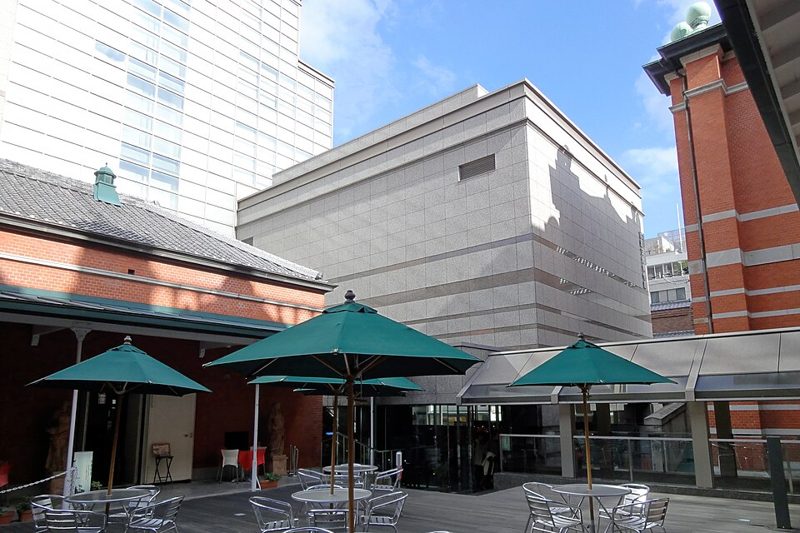
The Annex of the Museum of Kyoto was once the Kyoto Branch of the Bank of Japan. A Bank of Japan office was established in Kyoto in April 1894, and it moved into this building in July 1906. The architects were Kingo Tatsuno and his student Uheiji Nagano.
The building continued to serve as a Bank of Japan office until 1965. It reopened as the Heian Museum in 1968 and was designated an Important Cultural Property of Japan in 1969. What had once been a center of financial activity gradually became a place devoted to the city's history and cultural heritage.
When exploring Sanjo-Takakura, look for the red brickwork and tower of the former Bank of Japan Kyoto Branch. They offer a glimpse of a very different chapter in the building's history.
Sources: The Museum of Kyoto — The Building Then and Now (Japanese), Bank of Japan Kyoto Branch — History of the Branch (Japanese)
Next stop: book for later today PR
Experiences near here you can book on Klook.
Nishiki Food TourNishiki Market 3-hour food walking tour→Kyoto Walking TourHalf-day walk: Nijo Castle, Nishiki Market and Gion→Ad: Klook affiliate links.
🍜 Where to eat after
Restaurants near here on Google Maps→Many restaurants in Kyoto take reservations, and some are cash only. Check the restaurant page before you go.
FAQ
- What is Special Exhibition: Kan'ei — Beauty Nurtured by an Age of Peace at The Museum of Kyoto?
- In 1626, Emperor Go-Mizunoo was welcomed to Nijo Castle with five days of magnificent hospitality. Known as the Kan'ei Imperial Visit, the occasion was hosted by the retired shogun Tokugawa Hidetada and the reigning shogun Tokugawa Iemitsu. Eleven years after the destruction of the Toyotomi clan in the Summer Siege of Osaka, the visit also served as a political ceremony symbolizing reconciliation between the imperial court and the Tokugawa shogunate. This exhibition explores the historic visit and the flourishing cultural achievements of the early Edo period. Elaborate room decorations, fine cuisine, court dance, Noh theater, waka poetry, and instrumental music reveal the sophistication of the era. It was also a time of extraordinary artistic activity associated with figures such as Koetsu Hon'ami, Sotatsu Tawaraya, Ninsei Nonomura, and Senko Ikenobo.
- When is Special Exhibition: Kan'ei — Beauty Nurtured by an Age of Peace at The Museum of Kyoto?
- From Sep 19 (Sat) to Nov 15 (Sun), 2026.
- What are the opening hours?
- 10:00 – 18:00
- How much does it cost?
- Adults ¥1,800; university and high school students ¥1,200; elementary and junior high school students ¥600
- Where is it and what is the nearest station?
- The Museum of Kyoto. The nearest station is Karasuma Oike.
More in Kyoto
Art exhibition
Tanomura Chokunyu and Modern Kyoto Nanga: Ambience of Nature at The Museum of Kyoto
The Museum of Kyoto, 2F Gallery (Karasuma Oike Sta.)
Oct 3 (Sat) – Nov 29 (Sun) 10:00 – 19:30
Marking 130 years since the Japan Nanga Association was founded and 120 years since the death of its leader Tanomura Chokunyu (1814-1907). Works and materials mainly from the Kyoto Prefecture collection introduce the literati painting of modern Kyoto. Last entry 7:00 PM; closed Mondays (open November 23, closed November 24).
Details →Art exhibition
Eternal Spirits: Go Nagai - Go Nagai Wonderland Revival (Kyoto) at The Museum of Kyoto
The Museum of Kyoto, 3rd-floor gallery (Karasuma Oike Sta.)
Nov 28 (Sat) – Jan 11 (Mon) 10:00 – 18:00 (details on the official site)
An exhibition on Go Nagai, creator of Mazinger Z, Devilman and Cutie Honey. Its core is the original art and figures recovered from the burned Go Nagai Wonderland museum in Wajima after the 2024 Noto Peninsula earthquake. Highlights include the quake-damaged large Great Mazinger figure, the restored Mazinger Z original art, the unrestored Demon Lord Dante art, a display on the Wajima Taisai (Kiriko) festival, and new manga Nagai drew for the show. Advance tickets on sale until Nov 27.
Details →Art exhibition
KYOTO Ekinaka Art Project 2026 (Student Art in Subway Stations) at 11 Kyoto City Subway stations
11 Kyoto City Subway stations (Karasuma Oike and others) (Karasuma Oike Sta.)
Nov 20 (Fri) – Jan 27 (Wed) Hours: please check with the organizer
Students from 13 Kyoto universities install works on the theme UPDATE in 11 subway stations, with a keyword rally across the stations.
Details →Art exhibition
Kyoto ddd Gallery Exhibition No. 254: Superplay — Graphic Design from Rotterdam
Kyoto ddd Gallery (Shijo Sta.)
Nov 4 (Wed) – Jan 13 (Wed) Tuesday–Friday 11:00 AM–7:00 PM; Saturdays, Sundays, and public holidays 11:00 AM–6:00 PM
A graphic design exhibition featuring Rotterdam-based studios Studio Spass and Team Thursday.
Details →Nov 1 (Sun) – Nov 23 (Mon) 09:00 – 18:00 (details on the official site)
A City of Kyoto trial linking Pontocho Park to the Kamo River with a temporary staircase, plus chairs and a lawn corner. On Nov 13 and 14 only, food stalls serve craft beer, sake, kamameshi rice, shumai and takoyaki from 11 a.m. to 9 p.m. Rain date: Nov 15.
Details →Art exhibition
Architecture Shaped by Time: TIME'S and Tadao Ando (Kyoto Architecture Center)
Kyoto Architecture Center (inside TIME'S) (Sanjo Sta.)
Sep 2 (Wed) – Nov 23 (Mon) 10:00 – 18:00 (details on the official site)
The first exhibition of the Kyoto Architecture Center, opened in September 2026 inside TIME'S, the 1984 Tadao Ando building on the Takase River. Photos from before and after construction, period magazines, drawings and models trace his design thinking.
Details →